Expandable Trailers Guide: Compact When You Need It
Updated for 2026. Learn expandable trailer basics with beginner-friendly guidance, setup tips, and rental recommendations.
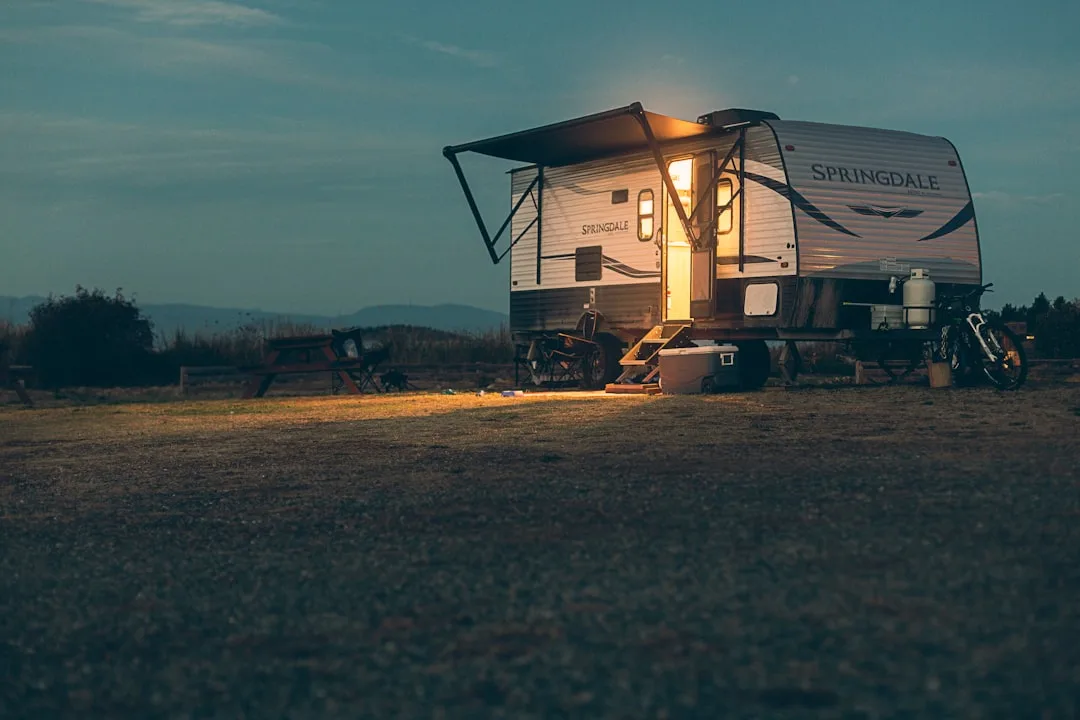
Photo by Joshua Sortino on Unsplash
An expandable trailer—often called a pop-up or folding camper—folds down to the size of a small car for towing, then unfolds into a roomy canvas-walled camper at the site. It tows behind most SUVs, costs little, and sleeps a family, but the soft walls mean weak insulation and almost no privacy from the weather. It is a tent on wheels with a floor, beds, and a kitchen.

Photo by Joshua Sortino on Unsplash
What Is an Expandable Trailer?
It travels low and hard-sided, then pops open: canvas “bunk ends” extend front and rear (or sides) to add sleeping and living space. Rentals tow 10-18 ft and expand to 15-25 ft.
Typical specs:
- Towing length: 10-18 ft
- Expanded length: 15-25 ft
- Weight: 1,500-3,500 lbs—most SUVs tow this
- Key feature: canvas pop-outs that add beds and space

Photo by Nick Hillier on Unsplash
Who an Expandable Actually Fits
A good fit if you:
- Want to camp without upgrading from an SUV or minivan
- Travel as a family on a budget
- Take warm-weather weekend trips
- Like a tent-like feel with a real bed and kitchen
A poor fit if you:
- Plan a two-week trip and will miss solid walls
- Camp in cold weather (canvas insulates poorly)
- Need an onboard bathroom
- Want a five-minute setup
What It Really Costs
Expandable rentals usually run $50-$100 per night, far less than a hard-sided travel trailer, and the light weight barely dents fuel economy. Find them on RVshare and Outdoorsy; book one to two months ahead for peak season.
Towing: Can Your Vehicle Handle It?
Most expandables weigh 1,500-3,500 lbs, so most SUVs, minivans, and even some crossovers can pull one—if the owner’s manual lists the capacity. Remember the rating covers the trailer plus everything you load inside it. A Class I or II hitch and a 4-pin or 7-pin wiring connection are the usual requirements.
Setup at the Campground
Plan 15-30 minutes:
- Back onto a level spot and set the wheel chocks.
- Crank or lift the roof and extend the canvas bunk ends.
- Stake down the canvas corners so wind can’t lift it.
- Lower the stabilizing jacks and connect utilities if available. Practice once in your driveway—the first real setup goes smoother.
Common First-Trip Mistakes
- Not staking it down. Wind can lift an unstaked canvas end; always stake all corners.
- Overpacking. Storage is tight; bring essentials and buy firewood at the campground.
- Skipping the orientation. The demo shows the crank order and stake points—worth the time.
- Ignoring weather. Seal canvas seams if rain is forecast and pack a tarp.
Beginner Checklist: Expandable Trailer Rental
Before renting:
- Confirm your vehicle’s tow rating (most need 3,500 lbs)
- Arrange a hitch and wiring harness if needed
- Practice towing and backing up
- Learn the crank and stake routine
- Book 1-2 months ahead for peak season
At pickup:
- Attend the full orientation—don’t rush
- Inspect canvas for tears and test lights and brakes
- Practice setup once in the lot
- Get the after-hours contact number
At the campground:
- Find a level spot
- Extend the canvas ends carefully
- Stake down all corners
- Connect utilities if available
FAQ
Q: Do I need a special license? A: No. Under 26,000 lbs GVWR needs only a standard license; be comfortable with the length.
Q: How much does it cost to rent one? A: About $50-$100 per night; summer runs $20-$30 higher.
Q: Can I camp in one during winter? A: Technically yes, but canvas walls insulate poorly—bring extra blankets and a safe heater.
Q: What about bugs? A: Canvas windows and doors have screens; keep them closed at night.
Q: Is this a good first RV? A: For warm-weather weekends, yes—affordable, light to tow, and a gentle way to learn.
An expandable trailer trades solid walls for low cost and easy towing. If you camp in good weather and want a family bed off the ground, it is a smart first step.
Run your vehicle’s tow rating against the loaded trailer with our RV Weight & Payload Calculator.