RV Generator Guide for Renters: Rules, Usage and Etiquette Tips

Planning your first RV trip? Learn rv generator guide for renters with usage rules, fuel tips, quiet hours and practical safety checklists for beginners.

RV Generator Guide for Renters: Rules, Usage and Etiquette Tips

Photo by Aaron Burden on Unsplash

A generator turns dry camping from a one-night survival test into a comfortable multi-day stay. It powers the air conditioner, microwave, and outlets when no shore power is available, which means you can camp in remote spots without giving up the comforts that made an RV appealing in the first place. But for first-time renters, generators come with a learning curve: rules about when to run them, how much fuel they burn, and how to avoid angering your neighbors.

This rv generator guide for renters covers the basics of built-in versus portable units, the rules you will encounter at campgrounds, and practical usage tips to stretch your fuel and battery life. You will learn what a generator can and cannot power, how to respect quiet hours, and how to plan your power needs before you hit the road.

For a broader look at how power fits into your camping style, read our guide on full vs partial vs dry hookups to understand when you will actually need a generator.

Campfire at night at an RV campsite where generator use supplements battery power

Photo by Aaron Burden on Unsplash

Built-In vs Portable RV Generators

Rental RVs handle generator power in two ways, and knowing which you have shapes every decision in this guide.

Built-In Generators

Found mostly on Class A and larger Class C motorhomes, a built-in generator runs on the RV’s main fuel tank (gasoline or diesel) or a dedicated propane tank. It starts with a dash switch or interior button and is already wired into the RV’s electrical system.

  • Pros: High output (4,000 to 8,000 watts), easy to start, no setup, runs large appliances like air conditioners.
  • Cons: Burns main fuel or propane, louder than portable inverter units, often metered by the rental company at $3 to $5 per hour.

Portable Inverter Generators

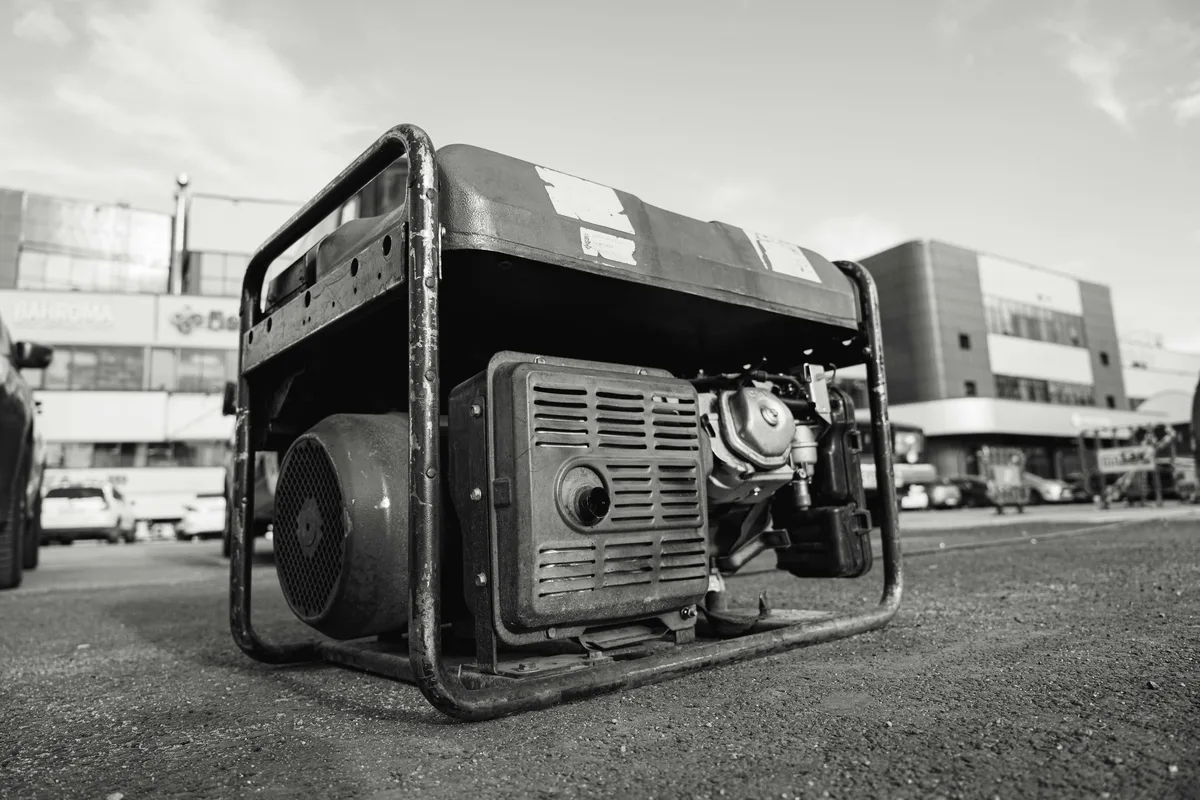
Common on smaller Class C and camper van rentals, a portable generator is a separate unit you place outside and plug into the RV’s shore power cord. These usually run on gasoline.

  • Pros: Quiet (often 50 to 60 decibels), fuel-efficient, can be moved away from the RV to reduce noise.
  • Cons: Lower output (2,000 to 3,500 watts), may not start a large air conditioner, requires manual setup and fueling.

Ask your rental company exactly what is included and whether generator hours are metered. Some owners include a free daily allowance and charge for anything beyond that.

What an RV Generator Can Power

Generators are rated in watts, and matching the output to your needs prevents overload and frustration. Here is what typical loads look like:

ApplianceApproximate Running WattsNotes
RV air conditioner (13,500 BTU)1,300 to 2,000Needs a 2,500 to 3,000W start-up surge
Microwave1,000 to 1,500Short bursts, high draw
Refrigerator (electric mode)400 to 600Often runs on propane instead
TV and media100 to 300Low continuous draw
Battery charger / converter300 to 800Charges house batteries
Lights and outlets100 to 500Depends on usage

A built-in generator handles most of these at once. A 2,000-watt portable can run the microwave or the air conditioner, but usually not both simultaneously, and it may struggle with the AC start-up surge. If you plan to run the air conditioner off a portable generator, confirm the wattage rating before your trip.

Campground Generator Rules and Quiet Hours

Generators are noisy, and campgrounds regulate them strictly to keep the experience pleasant for everyone. Rules vary by location, but the pattern is consistent.

National Park and State Park Rules

  • Generators may only run during posted hours, usually 8:00 to 10:00 AM and 4:00 to 8:00 PM.
  • Noise is capped at 60 decibels at 50 feet. Inverter generators meet this; older open-frame models often do not.
  • Some loops or campgrounds ban generators entirely. Check before booking.

Private RV Park Rules

  • Many private parks allow generators only when shore power is unavailable, or not at all.
  • Quiet hours (typically 10:00 PM to 6:00 AM) apply everywhere. Running a generator during quiet hours is the fastest way to get a knock from the host or a ranger.

Boondocking and Public Land

  • On Bureau of Land Management or national forest land, rules are looser, but courtesy still applies.
  • Keep generators off during evening and early morning hours even if no rule is posted.
  • Position the generator and RV so the exhaust points away from neighboring campers.

Fuel Consumption and Planning Your Power Budget

Generators burn fuel, and that fuel comes out of your trip budget. A built-in gasoline generator typically uses 0.5 to 1 gallon per hour under moderate load. A propane generator uses roughly 1 to 1.5 gallons of propane per hour.

To plan your power budget:

  1. List the appliances you expect to run and for how long each day.
  2. Estimate total generator hours needed to cover those loads and recharge batteries.
  3. Multiply hours by fuel consumption to estimate daily fuel use.
  4. Add that fuel to your trip total using the RV fuel calculator.

For example, running a built-in generator three hours per day to charge batteries and run the AC during the hottest part of the afternoon might add 2 to 3 gallons of fuel per day. Over a week-long trip, that is 14 to 21 extra gallons, a real budget line item.

If you are dry camping, the boondocking water and battery calculator helps you estimate how long your battery bank will last and when you will need to fire up the generator to recharge.

RV Generator Guide for Renters: Best Practices

A few habits keep your generator running smoothly, your fuel bill reasonable, and your neighbors happy.

Start-Up and Shut-Down

  • Check the fuel or propane level before starting. Built-in generators often shut off automatically at a quarter tank to prevent stranding you.
  • Start the generator before plugging in heavy loads like the air conditioner. Let it warm up for a minute first.
  • Shut down large appliances before turning the generator off to avoid voltage spikes that can damage electronics.

Load Management

  • Run the generator in focused blocks of one to three hours rather than idling it all day. This charges batteries, runs the AC, and reheats water, then you switch back to battery power.
  • Charge phones and laptops while the generator is running so they do not drain the house battery later.
  • Use the microwave and other high-draw appliances only during generator run time.

Noise and Courtesy

  • Place portable generators at least 10 to 20 feet from the RV and never under a neighbor’s awning or window.
  • Respect quiet hours absolutely. If you need power overnight for medical reasons, talk to the host or choose a site with shore power instead.
  • Consider solar panels as a silent supplement. They extend battery life during the day so you run the generator less.

Common Beginner Mistakes

  • Running the generator during quiet hours: This is the top complaint hosts and rangers receive. Always check posted hours.
  • Overloading a portable generator: Plugging in the AC, microwave, and converter at once trips the breaker or damages the unit. Stagger your loads.
  • Ignoring the fuel gauge: Built-in generators can drain the main fuel tank faster than you expect. Keep the tank above a quarter.
  • Forgetting to turn off the generator before refueling: Always shut it down and let it cool before adding fuel to avoid fire risk.
  • Running it all day out of habit: Short, focused run blocks save fuel and reduce noise. All-day running is rarely necessary.
  • Assuming the rental includes free generator hours: Many owners charge by the hour. Confirm the allowance and rate before you book.

RV Generator Use Checklist for Renters

  • Confirm whether your rental includes a built-in or portable generator
  • Ask the owner about hourly fees and any daily allowance
  • Note the generator fuel type (gasoline, diesel, or propane)
  • Check campground generator hours and noise limits before booking
  • List the appliances you plan to run and their wattage
  • Plan focused generator run blocks instead of all-day idling
  • Keep the main fuel tank above a quarter to avoid auto-shutoff
  • Position portable generators away from neighbors and downwind
  • Never run the generator during quiet hours
  • Shut down the generator and let it cool before refueling

Conclusion

This rv generator guide for renters shows that a generator is one of the most valuable tools on a rental RV, but only if you use it deliberately. Knowing whether your rental has a built-in or portable unit, understanding the campground rules, and running focused power blocks instead of all-day idling will keep you comfortable, your fuel bill manageable, and your neighbors friendly. The goal is enough power to enjoy dry camping without treating the generator as a constant background noise.

Before your trip, use the boondocking water and battery calculator to estimate your off-grid power needs, and the RV fuel calculator to budget for generator fuel. Pair that with our full vs Partial vs dry hookups guide to decide which campsites actually require generator power. With a little planning, you will run the generator only when you need it and enjoy the quiet the rest of the time.

Disclaimer: This guide offers general beginner educational information only. Complex RV mechanical maintenance, repairs and safety adjustments should be completed by certified RV professionals. Always follow your RV rental company and vehicle manufacturer instructions.

Quick answers

Frequently Asked Questions

Does my rental RV come with a generator?
Some Class A and larger Class C motorhomes include a built-in generator, but many smaller rentals do not. This rv generator guide for renters recommends always checking the listing or asking the owner, because generators are often an add-on with an hourly usage fee.
How long can I run an RV generator each day?
Most campgrounds limit generator use to posted quiet hours, typically two windows of two to four hours in the morning and evening. Without restrictions, a generator can run several hours, but fuel and noise make shorter runs more practical.
How much fuel does an RV generator use?
A typical built-in RV generator uses about 0.5 to 1 gallon of fuel per hour under moderate load. It usually draws from the main fuel tank or a dedicated propane tank, so plan fuel stops accordingly.
Can I run the RV air conditioner on a generator?
Yes, a built-in RV generator usually has enough wattage to run one air conditioner along with basic appliances. Portable generators may struggle with an AC start-up surge, so check the wattage rating before relying on it.
Are generators allowed in national parks?
Yes, but only during posted generator hours and often only in certain loops. National parks usually cap noise at 60 decibels, which most inverter generators meet but older open-frame models may not.