Average RV Vacation Cost: Budget Guide for 2026
The average RV vacation costs $1,900–$3,200 for a 7-day, 1,000-mile trip in 2026 (Class B to Class A). See RvRove's full beginner budget breakdown.
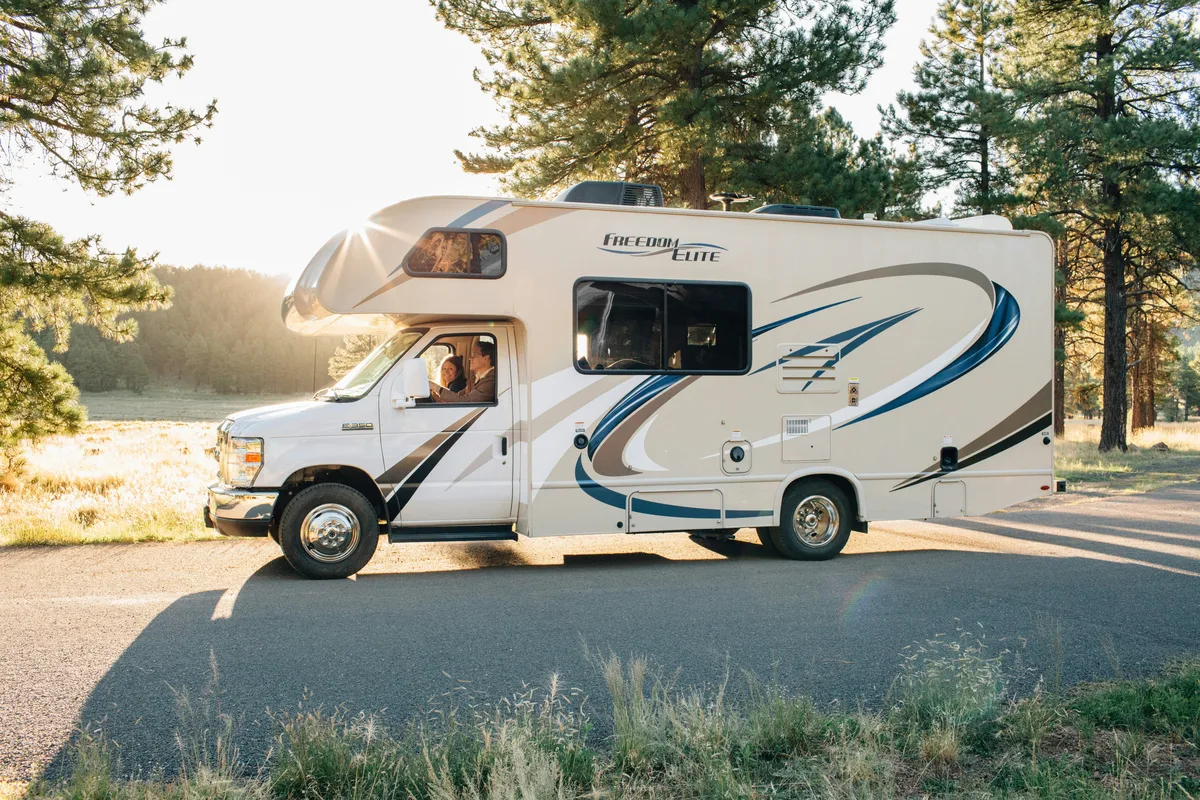
Photo by Allef Vinicius on Unsplash
“How much does an RV vacation cost?” depends entirely on the rig, the distance, and how you camp. There’s no single average that fits everyone, but there is a realistic range. This guide breaks down what U.S. renters actually pay in 2026, by RV class, for a typical 7-day, 1,000-mile trip.
Photo by Allef Vinicius on Unsplash
What Drives the Cost
Five things move the number most:
- RV class (nightly rate varies 2-3x from van to Class A)
- Miles driven (per-mile fees on most rentals)
- Fuel (6-20 mpg depending on the rig)
- Campgrounds (free dispersed to $70/night private)
- Fees (generator, dumping, cleaning, insurance)
Cost by RV Class (7 days, 1,000 miles)
Class B camper van (~$150/night, 18 mpg)
- Rental: $1,050 | Mileage: $300 | Fuel: ~$225 | Campgrounds: ~$270 | Fees/insurance: ~$125
- Total: ~$1,970
Class C (~$200/night, 10 mpg)
- Rental: $1,400 | Mileage: $300 | Fuel: ~$405 | Campgrounds: ~$270 | Fees/insurance: ~$150
- Total: ~$2,525
Class A (~$275/night, 7 mpg)
- Rental: $1,925 | Mileage: $300 | Fuel: ~$580 | Campgrounds: ~$270 | Fees/insurance: ~$175
- Total: ~$3,250
A family of four splitting one Class C pays roughly $630 per person for the week—before food. That’s the number most renters find surprisingly reasonable once they see the breakdown.
Fuel estimates use the AAA U.S. average regular price of ~$4.06/gal (retrieved 2026-08-11; AAA reported $4.09/gal on 2026-07-30, source: gasprices.aaa.com); your route’s cost = miles ÷ MPG × your local price. Re-run with the RV Fuel Calculator.
Campground Costs
- Dispersed/public land: free where allowed (check local rules and stay limits)
- National Forest and BLM sites: often $5-$15/night
- State parks: typically $20-$40/night
- Private parks (KOA and similar): $40-$70/night, more with full hookups and amenities
- Boondocking with friends or Harvest Hosts: often free or a low membership fee
Mixing free and low-cost sites into a week can cut lodging by a few hundred dollars.
Food
Cooking in the RV runs about $25-$40 per person per day; eating out every meal runs $50-$80. A family that cooks most nights saves $300-$500 a week versus restaurants.
The Fees People Forget
- Mileage: $0.30-$0.50/mile
- Generator: $3-$5/hour off-grid
- Dumping/cleaning: $50-$100 if not done before return
- Insurance: $15-$30/day optional coverage
- Propane: $20-$30 to refill a tank
Ways to Lower the Total
- Pick the smallest rig that fits your group. A van instead of a Class A can save $1,000+ on the same trip.
- Drive less. A loop near home beats a cross-country haul on mileage and fuel.
- Camp cheap. Free dispersed nights offset pricier private parks.
- Cook. The kitchen is the easiest savings after the rental.
- Book early. Summer rates and availability tighten by late spring.
Before you book, build your own estimate with our RV Trip Budget Calculator—it uses your route, dates, and rig to show the real number, not a generic average.
FAQ
Q: What’s the average cost of an RV vacation in the U.S.? A: For a 7-day, 1,000-mile trip, roughly $1,900-$3,200 all-in before food, depending on RV class. A group splitting one rig brings the per-person cost down fast.
Q: Which RV class is cheapest to vacation in? A: A Class B camper van—low nightly rate and 18-20 mpg. A Class A is the most expensive on both counts.
Q: How much should I budget for campgrounds? A: Anywhere from $0 (dispersed/public land) to $70/night at private parks. Mixing free sites keeps lodging low.
Q: Are there hidden fees I should expect? A: Mileage, generator, dumping/cleaning, insurance, and propane. Ask the rental shop for the full fee sheet before you book.
Q: How can I cut the total cost? A: Choose the smallest rig that fits, drive fewer miles, camp on free or cheap land, and cook most meals.
The “average” hides more than it reveals. Pick your rig and route, build the real number, and the trip stays predictable from the first night to the last.
Sources & Retrieval
- Fuel price: AAA U.S. average regular gasoline ≈ $4.06/gal, retrieved 2026-08-11 (AAA weekly fuel report, 2026-07-30: $4.09/gal; source: gasprices.aaa.com).
- Rental nightly rates & fees: Reflect typical 2026 U.S. peer-to-peer and outfitter rental ranges; rates are seasonal (summer high season commands more). Confirm exact rates with your rental company.
- Campground fees: Ranges reflect typical 2026 U.S. public-land, state-park, and private-park nightly rates.
- Estimates only. Build your own number with the RV Trip Budget Calculator before booking.