3-Day Beginner RV Itinerary Near Yellowstone National Park
A beginner-friendly 3-day RV itinerary near Yellowstone National Park with manageable driving, must-see sights, and practical camping tips.
Photo by Patrick Hendry on Unsplash
Yellowstone National Park is one of the most iconic RV destinations in the United States. Geysers, hot springs, waterfalls, and wildlife make it a bucket-list trip for many first-time RVers. But the park is also large, crowded, and full of winding roads that can feel intimidating in a big rig.
This 3-day itinerary is designed for beginners. It keeps driving distances reasonable, focuses on the park’s most accessible highlights, and builds in time to relax at your campsite. It works best from late spring through early fall.

Photo by Patrick Hendry on Unsplash
Day 1: Arrive and Explore the West Thumb Area
Pick up your RV in Bozeman, Montana, Idaho Falls, Idaho, or West Yellowstone, Montana. For beginners, West Yellowstone is the easiest gateway because it has full-service RV parks and a gentle entrance into the park.
Settle into your campground in the afternoon. If you are staying inside the park at Grant Village or Bridge Bay, take a short walk around the campground to get your bearings. If you are outside the park in West Yellowstone, explore the town and stock up on groceries.
In the late afternoon, drive to the West Thumb Geyser Basin. This is a compact, easy-to-walk area with colorful hot springs right along Yellowstone Lake. The boardwalks are flat and short, making it perfect for a first day.
Day 2: Old Faithful and the Upper Geyser Basin
Start early. Enter the park by 7:00 AM to beat crowds and find parking. Head straight to Old Faithful, the park’s most famous geyser. The visitor center posts predicted eruption times.
After watching Old Faithful, walk the Upper Geyser Basin boardwalks. This area has the highest concentration of geysers in the world. The trails are mostly flat and well-marked. Bring water, sunscreen, and a hat because there is little shade.
In the afternoon, drive north to Midway Geyser Basin to see the Grand Prismatic Spring. The boardwalk gives you a close-up view. If you have energy, the nearby Fairy Falls trail leads to an overlook with a panoramic view of the spring.
End the day with dinner back at the campground. If you are staying at a site with a fire pit, an easy campfire meal is a great way to relax after a day of walking and driving. Avoid cooking inside the RV right before bed so the odors do not linger overnight.

Photo by Photoholgic on Unsplash
Day 3: Grand Canyon of the Yellowstone and Lamar Valley
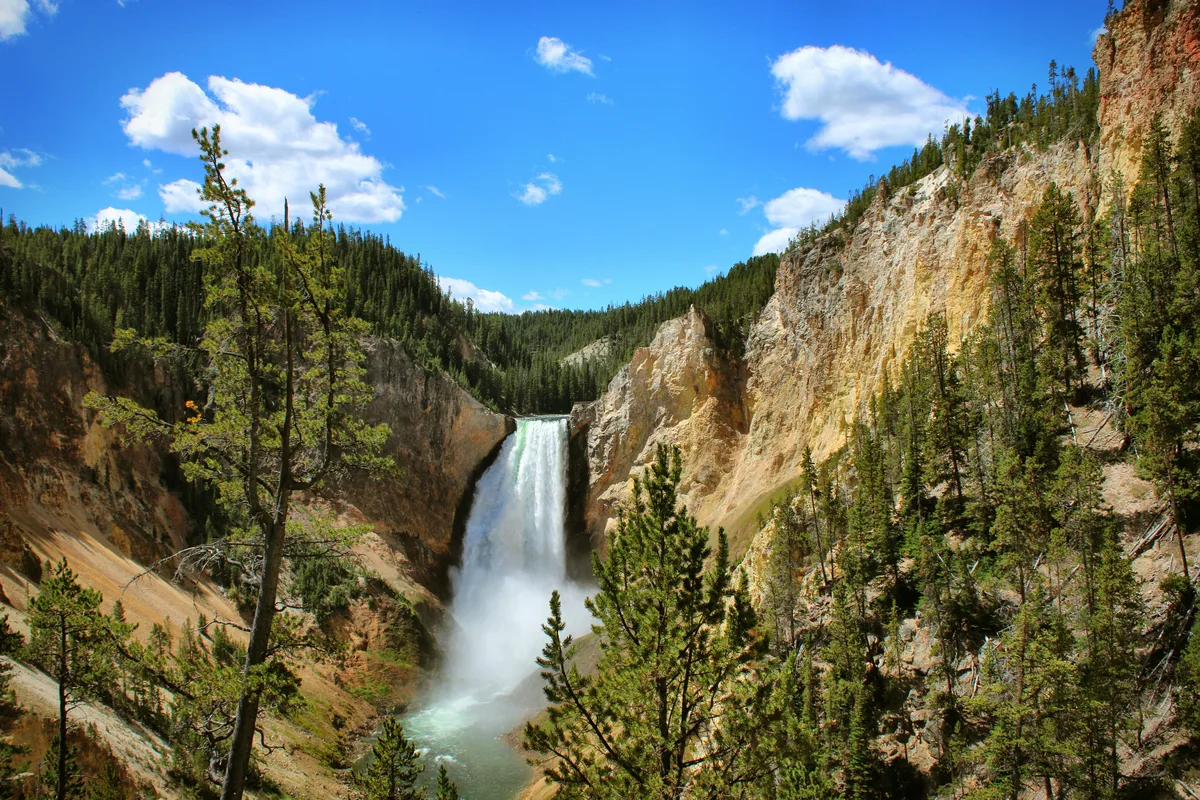
On your final day, drive to the Grand Canyon of the Yellowstone. Stop at both the North Rim and South Rim overlooks. Artist Point and Lookout Point offer stunning views of the Lower Falls without long hikes.
After lunch, head east toward Lamar Valley. This is one of the best wildlife viewing areas in the park. Bison, elk, bears, and wolves are often visible from the road. Drive slowly, use pullouts, and never approach wildlife.
Exit the park through the northeast entrance toward Cooke City, Montana, or loop back to your campground if you are staying another night.
Where to Camp
For your first Yellowstone RV trip, choose a campground with full hookups or at least electric. If you are unsure what those terms mean, read our guide on full hookup vs partial hookup vs dry camping. Good options include:
- Fishing Bridge RV Park: full hookups, inside the park, reservation required
- Bridge Bay Campground: inside the park, partial hookups
- Grant Village Campground: inside the park, partial hookups
- Yellowstone Grizzly RV Park: full hookups in West Yellowstone
- Madison Arm Resort: near Hebgen Lake, west of the park
Reservations open months in advance, often through Recreation.gov. If your preferred campground is full, staying in West Yellowstone and driving into the park each day is a practical backup plan.
What to Pack for Yellowstone
Yellowstone weather can change quickly, even in summer. Mornings can be near freezing, while afternoons feel warm. Pack layers so you can adjust throughout the day.
Must-haves include:
- Rain jacket and warm fleece
- Sturdy walking shoes or hiking boots
- Binoculars for wildlife viewing
- Bear spray if you plan to hike
- Reusable water bottles
- Sunscreen, sunglasses, and a wide-brim hat
- Plenty of snacks and picnic supplies
Food options inside the park are limited and expensive. Having sandwiches, fruit, and trail mix in the RV saves money and time.

Photo by Kevin Schmid on Unsplash
Driving Tips Inside the Park
The Grand Loop Road connects most major attractions, but it is not a highway. Bison often cause traffic jams, and visitors stop suddenly for wildlife. Stay patient and keep your distance.
Use pullouts whenever you want to take photos or let faster traffic pass. Never stop in the middle of the road. If you are driving a large RV, stick to the right lane and allow extra following distance.
Extending Your Trip
If you have extra time, consider adding a day at Grand Teton National Park just south of Yellowstone. The Teton Range offers stunning mountain views, easy hiking trails, and quieter campgrounds. Many first-time RVers combine the two parks into a single road trip.
Another option is to spend a day in West Yellowstone exploring the Grizzly and Wolf Discovery Center or taking a rafting trip on the Madison River. These activities give you a break from driving the park loop while still enjoying the area.
Beginner Yellowstone RV Checklist
Use this checklist to prepare for the trip:
- Reserve your campground months in advance
- Confirm your RV length fits the campsite
- Download offline maps before entering the park
- Pack bear spray and know how to store food
- Fill up with fuel before entering the park
- Bring layers for cold mornings and warm afternoons
- Carry binoculars and a camera with a zoom lens
- Plan meals to avoid expensive park restaurants
- Arrive early at popular attractions
- Keep a safe distance from all wildlife
Common Beginner Mistakes
- Underestimating distances: Yellowstone is huge. Driving from one highlight to another can take over an hour.
- Skipping reservations: Campgrounds fill up, especially in July and August.
- Getting too close to wildlife: Bison can run faster than you think.
- Ignoring elevation: Yellowstone sits above 7,500 feet. Weather changes quickly.
For help booking campsites along the way, read our step-by-step guide to booking an RV campsite. Before you leave, review our top mistakes first-time RV renters make.
Photography Tips for Beginners
Yellowstone is incredibly photogenic. For the best shots, visit geysers early in the morning when steam is visible and crowds are smaller. At Lamar Valley, use a zoom lens or binoculars to capture wildlife without getting close.
Do not fly drones in the park; they are prohibited. Stay on boardwalks in thermal areas both for safety and to avoid damaging fragile landscapes. A simple smartphone can capture amazing memories if you focus on composition and lighting.
Meal Planning for Yellowstone
Eating well on this itinerary requires a little planning. Grocery stores in West Yellowstone are convenient but can be busy. Stock up on breakfast items, sandwich supplies, snacks, and easy dinners before you enter the park each day.
A simple camp stove or the RV kitchen works great for breakfast and dinner. For lunch, pack sandwiches and fruit so you can eat at a scenic pullout instead of returning to the campground. This saves time and money while letting you enjoy more of the park.
Cell Service and Connectivity
Cell service inside Yellowstone is spotty at best. Do not rely on your phone for navigation or communication in remote areas. Download offline maps before you arrive and carry a paper map as a backup.
Let someone outside the park know your general itinerary and when you expect to return to service. This is especially important if you plan to hike or explore less-traveled roads.
Safety Around Wildlife and Thermal Features
Yellowstone’s wildlife and geothermal features are beautiful but dangerous. Always stay at least 25 yards away from bison, elk, and deer, and at least 100 yards away from bears and wolves. Use pullouts and never block traffic for photos.
Thermal features have fragile crusts that can be deadly. Stay on boardwalks and designated trails. Do not touch the water or throw objects into hot springs. Following these rules keeps you safe and protects the park for future visitors.
Best Time of Year for This Itinerary
This itinerary works best from late May through early October. Most park roads close to regular vehicles in winter, and some facilities shut down in late fall. Summer is the busiest season, so book early and expect crowds at major attractions.
Late spring and early fall offer fewer visitors, cooler temperatures, and better chances of seeing wildlife. Some higher-elevation campgrounds may not open until June, so check operating dates before you book.
FAQ
Conclusion
A 3-day Yellowstone RV trip gives beginners a perfect introduction to the park without overwhelming them. Focus on Old Faithful, the Grand Canyon, and Lamar Valley, and give yourself time to enjoy the journey between stops. With good planning and an early start, your first Yellowstone RV adventure can be unforgettable.
Disclaimer: This guide offers general beginner educational information only. Complex RV mechanical maintenance, repairs and safety adjustments should be completed by certified RV professionals. Always follow your RV rental company and vehicle manufacturer instructions.
Quick answers