RV Charging & Fresh-Water / Dump-Station Finder (2026)
How RVers find EV charging, potable-water fill stations, and dump stations in 2026. Live directory links, NACS adapter reality, costs, etiquette, and a 50-state notes table.
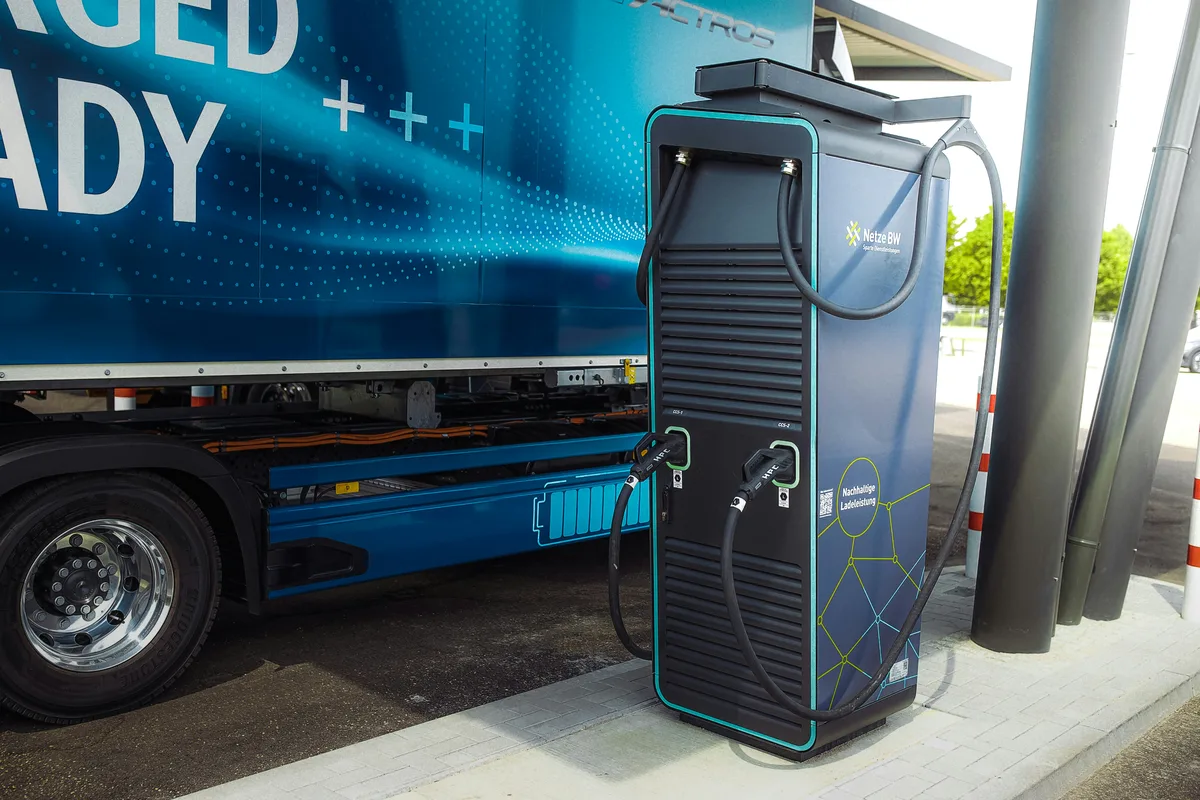
Photo by Netze BW on Unsplash
Finding a place to charge an EV tow vehicle, fill your fresh-water tank, or dump black and gray tanks is a different problem from finding a campsite — and the data changes constantly. This guide does not try to list every individual station (that would be out of date the week it publishes). Instead it points you to the live directories that actually maintain this data and explains the rules, costs, and etiquette that catch first-timers out. A 50-state notes table at the end summarizes regional coverage and the best free or low-cost options per state.
A. EV Charging for RVs and Hybrid Campers
Most RVs are still gas or diesel, but the EV angle now matters for three groups: EV daily drivers and tow vehicles, hybrid travel trailers, and the small but growing class of electric motorhomes.
- Level 1 (120V household outlet) delivers roughly 3–5 miles of range per hour. It is fine for an overnight top-up at a campground with shore power but useless for road-tripping. Pack a 25–50 ft extension rated for the load.
- Level 2 (240V, ~7–11 kW) is the workhorse — typically 8–10 hours for a full charge. Many RV parks and some state-park campsites now offer 240V/50A pedestals you can also use for an EV. Search PlugShare (filter “Tesla Destination” + J1772) and ChargePoint.
- DC fast charging (DCFC) is pull-in-and-wait (50–350 kW). Important for rigs: most DC fast chargers are not designed for a vehicle plus trailer. In PlugShare, enable the “pull-through / trailer-friendly” filter. Real-time availability comes from PlugShare’s “Available Now” filter and the network apps (EVgo, Electrify America).
- Networks to know: PlugShare (largest crowd-sourced map, owns RVingLife/Sanidumps data), ChargePoint (biggest Level 2 footprint), Electrify America (highway-corridor 150–350 kW CCS), EVgo (30+ states, up to 350 kW, 100% renewable), and Tesla (Superchargers + Destination chargers at hotels/campgrounds).
The NACS adapter reality (2025–2026)
NACS (SAE J3400) is now the North American standard. 2025-and-newer Ford, GM, Hyundai, Kia, BMW, Toyota, Rivian, Volvo, and Tesla vehicles charge at Superchargers natively. Older CCS vehicles generally need a CCS-to-NACS adapter (Tesla’s official unit supports up to 250 kW) to use Superchargers; Tesla owners use a ~$230 CCS1 adapter for non-Tesla DCFC. Critical: AC (J1772↔NACS) and DC (CCS↔NACS) adapters are not interchangeable — using the wrong one is a safety risk.
B. Fresh-Water Fill Stations
Where to fill:
- Campgrounds and RV parks (often free for guests; small fee for non-guests).
- State and national park campgrounds (many include potable water at the dump station).
- Travel centers — Pilot/Flying J, Love’s, TA-Petro — often allow potable-water fills, sometimes free with fuel, sometimes $5–10.
- Visitor centers, city/county parks, some truck stops, gas stations, RV dealerships, Cabela’s/Camping World, and fire stations (ask first).
Typical cost: Free at many public spigots; $5–10 at some travel centers and campgrounds for non-guests. Etiquette: always bring your own drinking-water hose (never the sewer hose), verify the spigot is labeled potable, ask inside before filling at a business, and don’t leave a mess. Remember that non-potable water (the BLM Five Mile station on the Dalton Highway explicitly notes its water is non-potable) is for rinsing tanks only — never for your fresh tank.
C. Dump Stations
Directories (use several — none is 100% complete):
- Sanidumps / RVingLife — 17,000+ listings, 15+ years of data.
- RV Dump Stations (rvdumps.com) — focuses on non-campground sites (rest areas, truck stops, gas stations).
- Campendium — set Category to “Dump”; user reviews, photos, and rig-size notes.
- RV Dump Finder — 18,000+ community listings with nearest-10 GPS.
- RVshare state guides — per-state lists with pricing.
Free vs paid: rest areas (some Western states), city/county parks, casinos, fairgrounds, and many state parks are free or low-cost. Truck stops (Pilot/Flying J/Love’s/TA) typically run $5–10; commercial RV parks charge $10–25 for non-guests. Etiquette: dump black first, then gray (gray rinses the hose), wear gloves, rinse the pad, and carry cash for rural stations — early mornings avoid weekend queues.
Finding one on the road
Scout the next dump station before you leave the current one, while you still have cell service. Download offline maps (Sanidumps has an offline mode) before rural Utah, Montana, or Texas Hill Country. State parks are the best walk-up fallback — search “state park dump station + [state].”
D. Boondocking Water
On BLM and Forest Service land, fill tanks in town before you enter. Many National Forest campgrounds (e.g., Stone Creek on Mt. Hood) explicitly say “fill your water tanks before arriving; we do not have fill stations.” Ranger stations sometimes have spigots; town utilities and transfer stations are reliable. Conserve aggressively — boondocking couples use roughly 3–5 gallons per day conserved, versus 30–50 at a full-hookup site. Navy showers, dish tubs, and a composting toilet (to skip black dumps entirely) stretch your supply the furthest.
Directory Cheat-Sheet
| Need | Go here | How-to |
|---|---|---|
| EV map | PlugShare | Set vehicle, filter plugs + “Available Now” + “Trailer friendly” |
| Level 2 / workplaces | ChargePoint | Map nearest J1772 |
| Highway DCFC | Electrify America · EVgo | Route filter in app |
| Tesla | Tesla | Supercharger/Destination map; check NACS-adapter badge |
| Water fill | Campendium + travel-center locators (Pilot/Flying J, Love’s, TA-Petro) | Water filter; ask at counter |
| Dump | Sanidumps · rvdumps.com · Campendium (Category→Dump) · RV Dump Finder | Search by city/zip/state; filter free vs paid |
| Public lands | Recreation.gov · BLM · Forest Service | Federal campgrounds + dispersed rules |
| State parks | America’s State Parks | Per-state park pages list dump + water |
50-State Notes
“Coverage note” is a high-level regional characterization only — confirm live stations on the linked directories. Specific station names and addresses are intentionally omitted; use the directories above.
| State | Charging coverage (high-level) | Notable free/low-cost fill or dump | Key directories |
|---|---|---|---|
| Alabama | I-65/I-85/I-20 corridors; metros have DCFC; rural sparse | Pilot/Flying J & Love’s dump ~$10 ($5 w/ RV Plus); RV parks free for guests | PlugShare · Campendium · Sanidumps |
| Alaska | Very limited; Anchorage/Fairbanks only | BLM Five Mile Dump Station water is non-potable; fill in town | PlugShare · Campendium · Sanidumps |
| Arizona | I-10/I-17/I-40; Phoenix/Tucson dense; desert sparse | Many AZ State Parks have dump + potable water | PlugShare · Campendium · Sanidumps |
| Arkansas | I-30/I-40/I-49; Little Rock dense | State parks + travel centers | PlugShare · Campendium · Sanidumps |
| California | Dense I-5/US-101/metros; fast rural buildout via NEVI | Many CA State Parks offer dump; 500+ CA dump sites listed | PlugShare · Campendium · Sanidumps |
| Colorado | I-25 Front Range dense; I-70 mountain corridors | State parks (e.g., Chatfield) have dump; Love’s ~$10 | PlugShare · Campendium · Sanidumps |
| Connecticut | Small; I-95/I-84 dense | State parks + travel centers | PlugShare · Campendium · Sanidumps |
| Delaware | Small; I-95 decent | State parks + travel centers | PlugShare · Campendium · Sanidumps |
| Florida | Dense I-95/I-75/I-4/Turnpike; Everglades sparse | Many FL State Parks have dump + water; Flying J/Love’s dump ~$5 | PlugShare · Campendium · Sanidumps |
| Georgia | I-75/I-85/I-20; Atlanta dense | State parks + travel centers | PlugShare · Campendium · Sanidumps |
| Hawaii | Oahu dense; neighbor islands limited | County parks/campgrounds for fill/dump | PlugShare · Campendium · Sanidumps |
| Idaho | I-84; Boise dense; remote sparse; extensive BLM/NF | Farragut State Park free dumping; Pilot/Flying J ~$10/$5; Love’s ~$5 | PlugShare · Campendium · Sanidumps |
| Illinois | I-90/I-94/I-55; Chicago dense | State parks + travel centers | PlugShare · Campendium · Sanidumps |
| Indiana | I-65/I-70/I-74; Indy dense | State parks + travel centers | PlugShare · Campendium · Sanidumps |
| Iowa | I-80/I-35; Des Moines dense | State parks + travel centers | PlugShare · Campendium · Sanidumps |
| Kansas | I-70/I-35; Wichita/KC dense | State parks + travel centers | PlugShare · Campendium · Sanidumps |
| Kentucky | I-65/I-75/I-64; Lexington/Louisville dense | State parks + travel centers | PlugShare · Campendium · Sanidumps |
| Louisiana | I-10/I-49; New Orleans/Baton Rouge dense | State parks + travel centers | PlugShare · Campendium · Sanidumps |
| Maine | I-95; Portland dense; north sparse | State parks + travel centers | PlugShare · Campendium · Sanidumps |
| Maryland | I-95/I-70; Baltimore/DC metro dense | State parks + travel centers | PlugShare · Campendium · Sanidumps |
| Massachusetts | I-90/I-93; Boston metro dense (Wompatuck SP has dump + water) | Some state parks have dump + free spring water | PlugShare · Campendium · Sanidumps |
| Michigan | I-75/I-94/I-96; metros dense; UP sparser | 103 state parks widely have dump stations (Recreation Passport) | PlugShare · Campendium · Sanidumps |
| Minnesota | I-94/I-35; Twin Cities dense; north sparse | State parks + travel centers | PlugShare · Campendium · Sanidumps |
| Mississippi | I-55/I-20/I-10; Jackson dense | State parks + travel centers | PlugShare · Campendium · Sanidumps |
| Missouri | I-70/I-44; St Louis/KC dense; Ozarks moderate | State parks + travel centers | PlugShare · Campendium · Sanidumps |
| Montana | I-90/I-15/I-94; metros dense; vast rural sparse | Town utilities + state parks; download offline maps | PlugShare · Campendium · Sanidumps |
| Nebraska | I-80; Lincoln/Omaha dense | State parks + travel centers | PlugShare · Campendium · Sanidumps |
| Nevada | I-15/I-80/US-95; Vegas/Reno dense; large desert gaps | Travel centers + town utilities | PlugShare · Campendium · Sanidumps |
| New Hampshire | I-93; Manchester dense | State parks + travel centers | PlugShare · Campendium · Sanidumps |
| New Jersey | Dense; I-95/NJTP; NYC metro | State parks + travel centers | PlugShare · Campendium · Sanidumps |
| New Mexico | I-25/I-40/I-10; Albuquerque/Santa Fe dense; desert sparse | State parks + travel centers | PlugShare · Campendium · Sanidumps |
| New York | I-87/I-90/I-81; metros dense; Adirondacks sparse | State parks + travel centers | PlugShare · Campendium · Sanidumps |
| North Carolina | I-85/I-40/I-95; Charlotte/Raleigh dense | State parks + travel centers | PlugShare · Campendium · Sanidumps |
| North Dakota | I-94/I-29; Fargo/Bismarck dense; rural sparse | State parks + travel centers | PlugShare · Campendium · Sanidumps |
| Ohio | I-70/I-71/I-75; metros dense | Pilot/Flying J ~$10 ($5 w/ RV Plus); Love’s varies; East Fork SP $10 non-guest | PlugShare · Campendium · Sanidumps |
| Oklahoma | I-35/I-40/I-44; OKC/Tulsa dense | State parks + travel centers | PlugShare · Campendium · Sanidumps |
| Oregon | I-5 dense; eastern OR sparse; extensive NF | NF campgrounds often prohibit filling tanks at standpipes — fill in town first | PlugShare · Campendium · Sanidumps |
| Pennsylvania | I-76/I-81/I-80; Philly/Pittsburgh dense | State parks + travel centers | PlugShare · Campendium · Sanidumps |
| Rhode Island | Small, dense; I-95 | State parks + travel centers | PlugShare · Campendium · Sanidumps |
| South Carolina | I-26/I-95; Charleston/Columbia dense | State parks + travel centers | PlugShare · Campendium · Sanidumps |
| South Dakota | I-90/I-29; Sioux Falls dense; Black Hills moderate | State parks + travel centers | PlugShare · Campendium · Sanidumps |
| Tennessee | I-40/I-75/I-24; metros dense; 56 state parks free entry | Many TN State Parks have dump + water | PlugShare · Campendium · Sanidumps |
| Texas | Dense metros; I-35/I-10/I-45; vast rural gaps | Travel centers + state parks; offline maps before Hill Country | PlugShare · Campendium · Sanidumps |
| Utah | I-15/I-70/I-80; Wasatch Front dense; desert sparse; extensive BLM | BLM land widespread; offline maps before rural UT | PlugShare · Campendium · Sanidumps |
| Vermont | I-89/I-91; Burlington dense | State parks + travel centers | PlugShare · Campendium · Sanidumps |
| Virginia | I-95/I-81/I-64; NoVA/Richmond dense | State parks + travel centers | PlugShare · Campendium · Sanidumps |
| Washington | I-5 dense; eastern WA sparse; extensive NF | NF dispersed + state parks | PlugShare · Campendium · Sanidumps |
| West Virginia | I-64/I-77/I-79; Charleston dense | State parks + travel centers | PlugShare · Campendium · Sanidumps |
| Wisconsin | I-90/I-94; Milwaukee/Madison dense | State parks + travel centers | PlugShare · Campendium · Sanidumps |
| Wyoming | I-25/I-80/I-90; Cheyenne/Casper; vast rural sparse | Green River WY dump is FREE (potable water not available nearby; pay water) | PlugShare · Campendium · Sanidumps |
Sources
EV charging / adapters
- PlugShare — map and network list
- ChargePoint, Electrify America, EVgo, Tesla
- GreenCars — EV Charging Connectors & Adapters (NACS/SAE J3400)
- EV Charging Adapter Guide
Fresh water / dump directories
- Campendium, Sanidumps / RVingLife, RV Dump Stations (rvdumps.com), RV Dump Finder, RVshare state dump-station guides, rvdumpstations.cc
Travel centers
Public lands / state parks
Etiquette / how-to guides
- RVshare — Free RV Water & Dump
- CampgroundViews — cheap/free dump & water
- WeretheRussos — water-fill tips
- RVMapper — dump-station finder
- RvingKnowHow — free dump stations
- BoondockOrBust — water/dump + conservation
Network counts (e.g., 65,000+ public charging locations / 180,000+ ports U.S. in 2025; EVgo ~900 fast-charge locations across 30+ states as of 2023) come from the sources above and shift constantly — re-verify at publish time. This guide is a directory hub, not a station list; the linked tools are the source of truth.
Quick answers