Teardrop Trailers Guide: Tiny Camping Adventure
Updated for 2026. Learn teardrop trailer basics with beginner-friendly guidance, pros, cons, and rental tips.
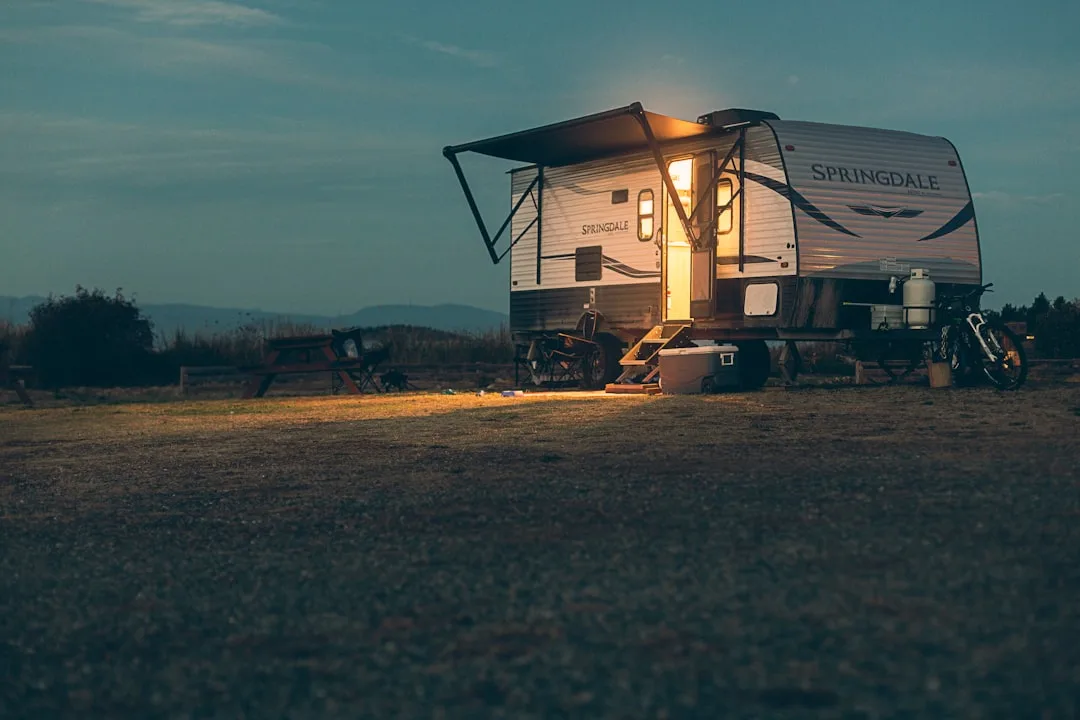
Photo by Patrick Hendry on Unsplash
A teardrop trailer is the smallest RV you can rent—shaped like its name, about the size of a small car, and light enough to pull with a sedan. It gives you a real bed off the ground and a rear galley kitchen, but no bathroom and almost no standing room. For weekend trips and remote campsites, it is the easiest, cheapest way to start.
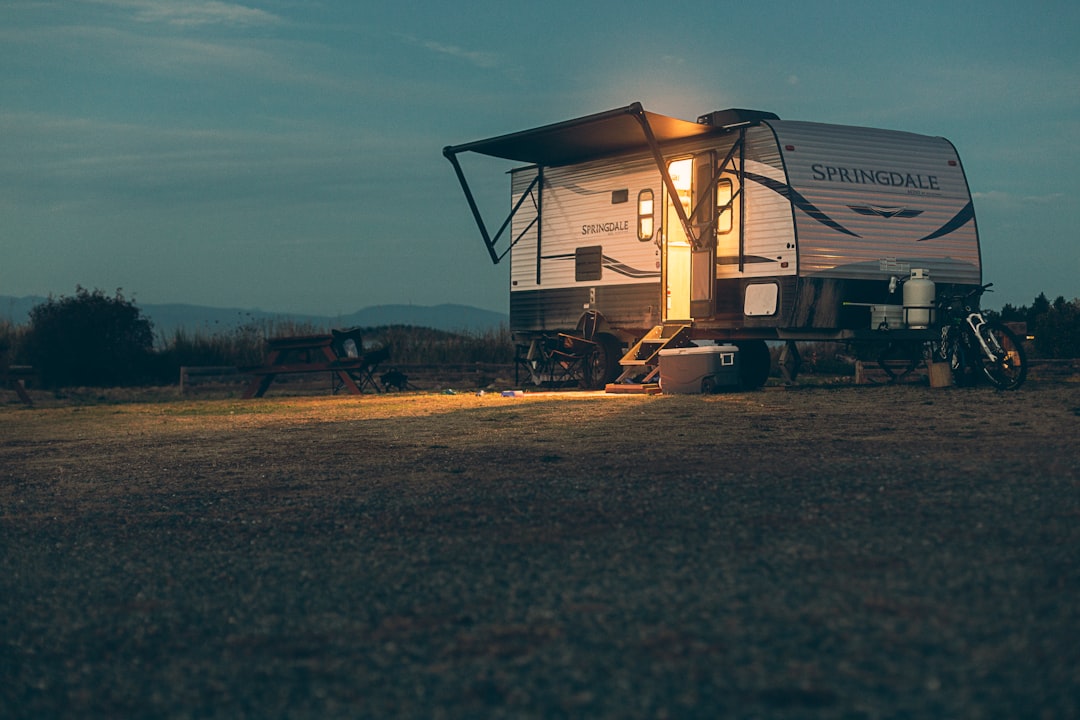
Photo by Patrick Hendry on Unsplash
What Is a Teardrop Trailer?
A teardrop is a compact camper with a bed inside and a small kitchen (the “galley”) on the rear exterior. You sleep in the body and cook at the back hatch. Rentals run 10 to 16 feet and sleep two.
Typical specs:
- Length: 10-16 ft; width 5-6 ft
- Weight: 500-2,000 lbs (most under 1,500)
- Sleeping: 2 people max
- Key feature: rear galley kitchen; some have a small roof vent or A/C

Photo by James Lee on Unsplash
Who a Teardrop Actually Fits
A good fit if you:
- Travel solo or as a couple
- Take weekend trips (1-3 nights)
- Want to reach national parks, remote campsites, and trailheads a big RV can’t
- Are renting for the first time and want the gentlest towing lesson
A poor fit if you:
- Travel with kids (it sleeps two)
- Plan a two-week trip and will miss space and a bathroom
- Need an onboard shower or toilet
- Expect air conditioning and a full kitchen
What It Really Costs
Teardrop rentals usually run $50-$100 per night, the cheapest of any RV type. Because they weigh under 2,000 lbs, towing barely dents your car’s fuel economy—often just 2-3 mpg below normal driving. Find them on RVshare and Outdoorsy; book one to two months ahead for peak season.
Towing: Can Your Car Handle It?
Most teardrops weigh under 1,500 lbs, so a Honda Civic, Toyota Camry, Subaru Outback, or any small SUV can tow one—as long as the owner’s manual lists at least a 1,500-2,000 lb rating. You’ll need a Class I or II hitch (many cars already have one; a shop installs one for a few hundred dollars). Trailer brakes are usually not required at this weight, but check your state—California and a few others require brakes above 1,500 lbs.
Setup at the Campground
This is the easy part:
- Back into a level spot and set the wheel chocks.
- Raise the front jack and level side to side if needed.
- Use the rear galley for cooking; store gear inside or in a small front box. Plan 10-15 minutes. Most of your time goes to enjoying the campsite, not setting up.
Common First-Trip Mistakes
- Overpacking. Space is extremely tight—pack one outfit per day and leave bulk at home.
- Expecting luxury. No bathroom or shower; plan to use campground facilities.
- Skipping practice. Even a light trailer backs up opposite to instinct—practice in a lot.
- Forgetting safety chains. Always run them; they’re cheap insurance if the coupler fails.
Beginner Checklist: Teardrop Rental
Before renting:
- Confirm your vehicle’s tow rating (most need 1,500-2,000 lbs)
- Arrange a Class I/II hitch if you don’t have one
- Practice towing and backing up
- Learn the basics: lights, coupler, jack
- Book 1-2 months ahead
At pickup:
- Attend the orientation
- Inspect for damage and test lights and tires
- Practice backing in the lot
- Get the after-hours contact number
At the campground:
- Find a level spot
- Set the chocks and level
- Cook at the rear galley
- Use campground showers and restrooms
FAQ
Q: Do I need a special license? A: No. Teardrops are well under 26,000 lbs; a standard license works in all states.
Q: How much does it cost to rent one? A: About $50-$100 per night, and towing costs almost nothing in fuel.
Q: Can I tow one with my car? A: Usually yes—most cars tow at least 1,500 lbs, which covers most teardrops. Check the manual.
Q: Do teardrops have bathrooms? A: Most don’t. You’ll use campground facilities; a few include a portable toilet.
Q: Is a teardrop good for boondocking? A: Excellent. Small, light, and easy to place on dispersed sites where larger RVs can’t go.
A teardrop strips camping to the essentials: you, the outdoors, and a dry, comfortable bed. If that sounds right, it is the lowest-risk, lowest-cost way to try RVing.
Confirm your car can tow the loaded trailer with our RV Weight & Payload Calculator.