Holiday Rambler Admiral 33A (Class A Motorhome) Winter Freeze & Summer
Freeze-protect your Holiday Rambler Admiral 33A Class A Motorhome down to -10F, summer cooling to 100F+. State-by-state cold weather rules. Free, 2026 North American parts.
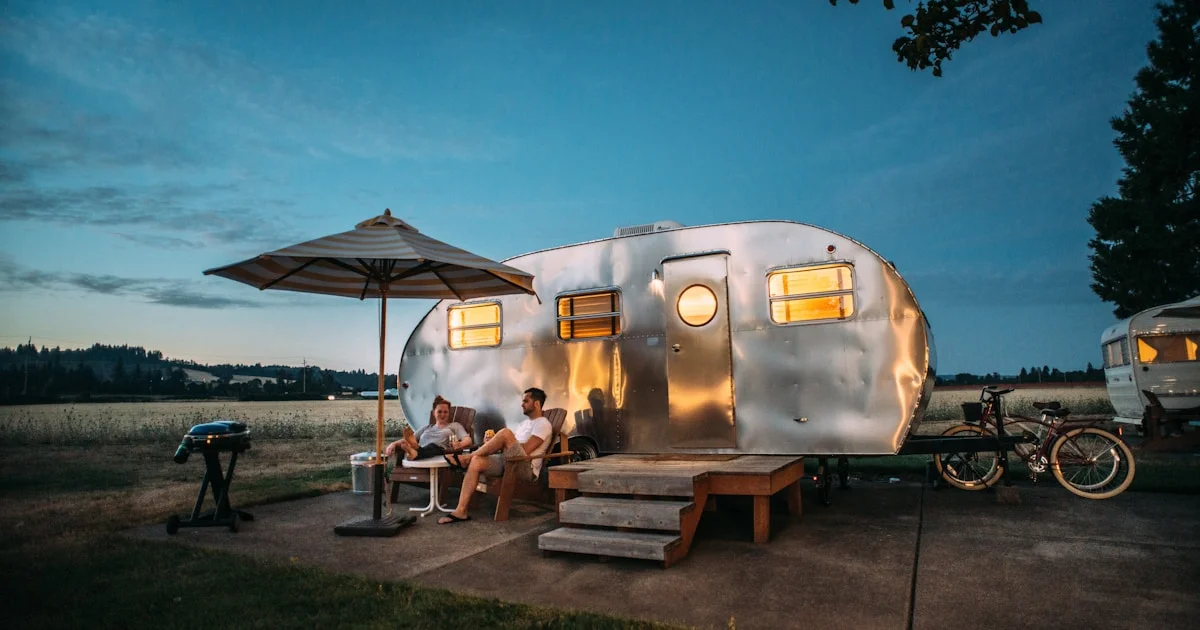
Photo by Hugo Sousa on Unsplash
A Holiday Rambler Admiral 33A is a great rig — until the first hard freeze cracks a fresh-water fitting or the first 100-degree week makes the roof AC give up at 4 p.m. This is the cold-and-hot playbook for the Class A Motorhome: what to do before the first freeze, what to skip, and which fixes are worth the money on a stock Admiral 33A.
Photo representative of Class A Motorhome camping setups.
Symptoms: How to Tell If Your Holiday Rambler Admiral 33A Has a Problem
The five symptoms below cover roughly 90% of seasonal equipment setup calls on a Class A Motorhome:
- Fresh-water line freeze even with furnace running
- Furnace ECO lockout on cold mornings
- Roof AC coil freezing over in humid weather
- Slide topper sagging under snow load
- Holding tank valves frozen open in spring
What Causes These Faults on the Holiday Rambler Admiral 33A
- Heat tape not extended to the dump valve
- Furnace combustion air intake blocked by snow
- Roof AC filter clogged — restricts airflow across coil
- Slide topper tension spring weak
- Black tank valve left open between dumps — solids dry and jam blade
- Missing or torn underbelly enclosure on travel trailers
Step-by-Step Diagnosis & Repair
Tools You Need
- Digital multimeter (auto-ranging, 10A DC)
- Infrared thermometer — check this on every diagnosis
- Non-contact AC voltage tester
- Torx/hex bit set (T15, T20, 5/16”)
- Crimp tool and ring-terminal kit for 12V repairs
- Soapy spray bottle for propane/water leak checks
- Soldering iron for inverter ground-fault traces
Diagnosis Flow
- Start with a charged battery bank. Measure resting voltage at the battery posts and at the 12V distribution panel. On the Holiday Rambler Admiral 33A, voltage drop greater than 0.4V between posts and panel means a corroded negative bus — fix that before chasing anything else on the Spartan Mountain Master chassis.
- Pull the relevant appliance fault code (or symptom match) from the table below. The Dometic/Norcold/Truma/Suburban manuals list codes by blink pattern or display, and most Holiday Rambler Admiral 33A owners will see one of the five codes listed in the Symptoms section.
- Isolate energy sources before opening covers. Shut the LP tank valve, disconnect shore power, and turn off the inverter. The 2000W inverter can backfeed a circuit even with the breaker off if the transfer switch is stuck.
- Use the infrared thermometer on the appliance. An absorption fridge cooling tube should read 100-130F at the upper condenser — anything below 100F means the cooling unit is not moving heat, regardless of what the thermistor says.
- Document the actual reading (not “feels warm”). Holiday Rambler Admiral 33A warranty claims often hinge on a written voltage reading taken at the appliance, not at the panel.
Repair Steps
- Survey the rig before the first freeze or first 95F week. Note every fresh-water fitting below the floor line and every vent without a reflector.
- Apply Low-tier freeze protection first (heat tape on exposed lines, foil-faced fiberglass in the basement, dump-valve box). On the Holiday Rambler Admiral 33A, the fresh-water pump section is usually the first thing to freeze — start there.
- For summer cooling, clean the roof AC filter, verify the condenser fins are not bent, and add Reflectix to the sun-side windows before adding a second AC unit.
- Document the setup in the rig’s binder so the next owner does not have to re-discover it.
- Test the freeze protection by leaving a remote thermometer in the basement during the first cold night. Below 32F in the basement means you need to extend the heat tape or add a 12V tank pad.
Three-Tier Optimization Plan (Low / Medium / High)
Every fix on the Holiday Rambler Admiral 33A falls into one of three cost tiers. Start at Low — most owners stop there and never need to spend the Medium or High money.
| Tier | Cost | What it includes |
|---|---|---|
| Low | $30-$120 | Add foil-faced fiberglass batts to basement; Heat tape fresh + dump valves; RV skirt with straw bales (cheap, dry climate only) |
| Medium | $200-$500 | Vinyl skirt with snap fasteners; Add 12V tank heater pads; Reflectix on windows + vent cushions |
| High | $700-$2200 | Hard-side insulated skirting; Second roof AC for desert summers; Heated water hose + enclosed underbelly with 12V pad |
Short Trip / Cross-Country / Winter Full-Time RV Settings
Short Trip (Weekend, 1-2 nights)
- Water: Fresh 30 gal — fill only what you need to keep weight down
- Battery: Battery at 80%+ on departure. 200Ah AGM covers 4 people for ~2.1 days without solar
- Solar: No solar needed for 1-2 nights. Battery-only is fine
- HVAC: Furnace set to 62F overnight, AC at 78F day. 30000 BTU furnace covers down to 30F
- Propane: 1-2 gal propane sufficient for a weekend of cooking + heat
Cross-Country (7-14 days, moving every 2-3 days)
- Water: Fresh 76 gal full at every fill. Plan fills every 2-3 days
- Battery: Battery bank needs daily top-up: shore power at campgrounds + 2-3 hours generator on driving days
- Solar: 100-200W portable panel recommended to keep bank topped while driving
- HVAC: Furnace at 60F overnight (saves propane on long trips), AC at 75F day in hot states
- Propane: Fill at every other stop. 7-gal tank lasts 4-5 days of fall camping with furnace
Winter Full-Time (1+ months stationary, sub-freezing)
- Water: Keep the fresh tank 50–75% full so there’s room for expansion; wrap every exposed line with heat tape.
- Battery: Below 32°F, lithium with self-heating is strongly advised — AGM/lead-acid sheds 25–30% capacity at 20°F, so add ~100Ah or step up.
- Solar: Plan on 200W+ of roof solar; the low winter sun means you’ll want to tilt the panels 30–45°.
- HVAC: Run the furnace at a steady 65°F and add Reflectix at the windows, skirt the rig, and use a basement heater pad.
- Propane: Budget 30–40 gal for a month of sub-freezing camping; an auto-changeover regulator is required.
Rules change by state — sometimes dramatically. Below is the matrix for this fault category, with the three states most relevant to this topic highlighted:
| State | Power limit | Water rule | Gray water | Battery | Generator |
|---|---|---|---|---|---|
| Montana (MT) | 30A common in state parks; some federal CGs no hookups | Glacier NP backcountry — no RV water fill at most sites | Strict; pack out or dump at designated | Cold-weather lithium self-heating essential; lead-acid loses 30% at 0F | Quiet hours 8pm-8am; many parks 55 dB limit |
| Alaska (AK) | 30A common; many sites have no hookups | Some sites require you to bring own water | Strict — dump stations few and far between | Self-heating lithium strongly recommended; AGM acceptable | Generators welcome in most AK parks due to limited solar in winter |
| Wyoming (WY) | 30A common; Yellowstone/Mammoth has 30A only | Yellowstone: no fresh-water fill at most sites — bring full | Strict — dump at designated stations only | Cold-weather lithium with self-heat strongly recommended | Generators 8am-8pm only at Yellowstone developed campgrounds |
Notes & regional differences
- **Montana**: Sub-zero winter camping requires heated battery compartment. - **Wyoming**: Generator altitude derate 25-30% in Yellowstone (7,000+ ft). - **Alaska**: Permafrost sites — level jacks can sink; use pads under all jacks.Most Common Mistakes That Make The Problem Worse
- Setting furnace to 50F “to save propane” — lines still freeze, furnace runs more
- Using household heat tape on RV water lines — not rated for flex, melts PEX
- Leaving awning out in winter storms — first wet snow bends the arm
- Skirting without ventilation — condensation rots the floor
- Closing vents in summer — traps heat, AC works twice as hard
- Draining black tank then driving in freezing temps — residual water freezes the valve
- Pouring RV antifreeze into fresh tank “for safety” — must sanitize after, tastes bad
Version BUG Timeline for the Holiday Rambler Admiral 33A
Production run: 2016-present. Common reported faults by model year:
| Year | Issue | Fix | Severity |
|---|---|---|---|
| 2018 | Residential fridge inverter overload tripping | Upgrade to 2000W pure sine inverter | major |
| 2021 | Hydraulic leveling jack slow retract | Flush fluid + replace solenoid | minor |
Pro Tips From the Field
- Skirt the rig in winter. Skirting alone keeps the floor 10-15F warmer and cuts propane use 30%.
- Heat tape every exposed fresh-water fitting, not just the obvious ones. The dump valve is usually the first to freeze.
- Close interior doors to unused rooms. Heating a 30-foot rig is a lot easier when you only need to heat 20 feet of it.
- Add a remote thermometer to the basement. If it drops below 32F down there, your heat tape is not enough.
Cross-Reference: Other Holiday Rambler Admiral 33A Articles
- Holiday Rambler Admiral 33A — Water System Faults
- Holiday Rambler Admiral 33A — Fridge / AC / Electrical Faults
- Holiday Rambler Admiral 33A — Battery / Solar / Power
- Holiday Rambler Admiral 33A — Fuel & Energy Optimization
- Holiday Rambler Admiral 33A — Payload & Tow Stability
- Holiday Rambler Admiral 33A — Common Faults & Error Codes
Other RVs With the Same Seasonal Equipment Setup
- Winnebago Vista 31BE (Class A Motorhome) — Seasonal Equipment Setup
- Winnebago Adventurer 35F (Class A Motorhome) — Seasonal Equipment Setup
- Winnebago Navion 24D (Class A Motorhome) — Seasonal Equipment Setup
- Winnebago Intent 30R (Class A Motorhome) — Seasonal Equipment Setup
- Winnebago Aspect 30J (Class A Motorhome) — Seasonal Equipment Setup
- Winnebago Journey 40P (Class A Motorhome) — Seasonal Equipment Setup
- Winnebago Bolt 24 (Class A Motorhome) — Seasonal Equipment Setup
- Winnebago Travato 59K (Class A Motorhome) — Seasonal Equipment Setup
The Bottom Line
The Holiday Rambler Admiral 33A is a capable Class A Motorhome once you sort out the common seasonal equipment setup patterns. There is no secret part here — just the right diagnosis in the right order. Do the cheap checks first, measure before you replace, and you will spend far less than the owner who guesses.
Quick answers