Host Lares (Truck Camper) Payload, Storage & Tow Stability
Balance your Host Lares Truck Camper: pin/hitch weight, payload budget, sway control. Free, no signup, 2026 North American tow ratings.
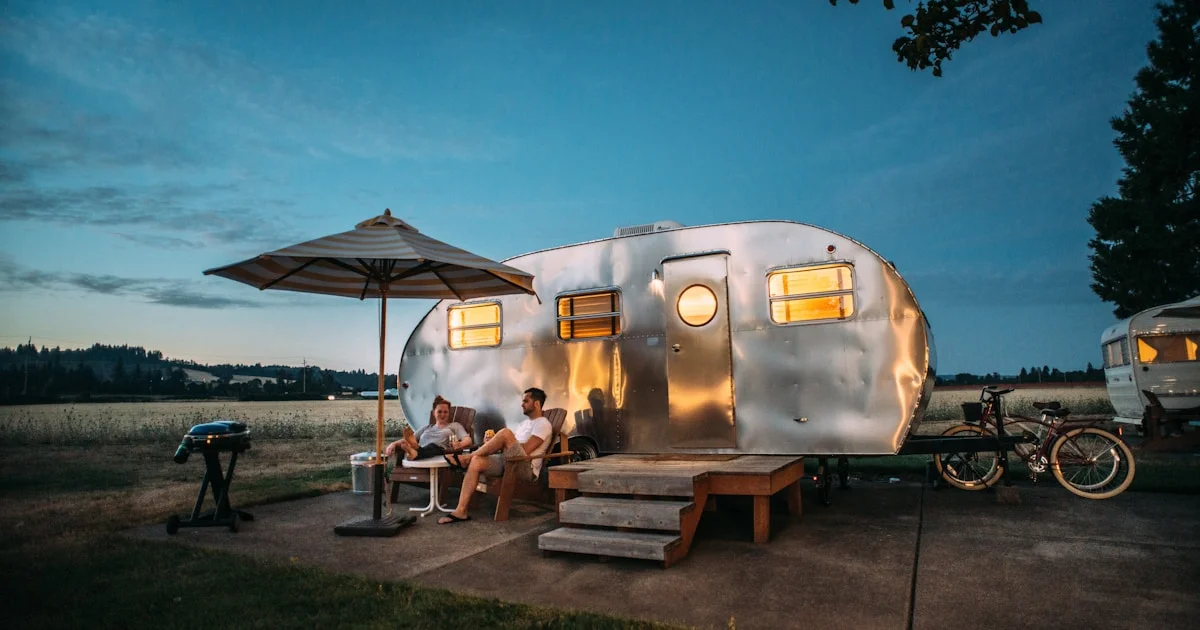
Photo by Hugo Sousa on Unsplash
Sway at 62 mph on I-80 with a crosswind is not normal, and a Host Lares does not get a free pass just because the GVWR is 11610 lb. This guide walks through real payload math, tongue/pin weight distribution, and the hitch upgrades that turn a white-knuckle tow into a one-hand drive on a Truck Camper.
Photo representative of Truck Camper camping setups.
Symptoms: How to Tell If Your Host Lares Has a Problem
The five symptoms below cover roughly 90% of payload & tow stability calls on a Truck Camper:
- Trailer sway at 55+ mph with crosswind
- Rear axle of tow vehicle sagging 2+ inches
- Truck front end feels light in steering
- Tire sidewall bulge on outside edge of rear duals
- Hitch creaking/popping on slow turns
What Causes These Faults on the Host Lares
- Tongue weight below 10% of trailer GVWR (should be 10-15%)
- Heavy items stored behind trailer axles (bikes, generators)
- WD hitch spring bars undersized for loaded tongue weight
- Tire pressure not matched to actual load (use load/inflation chart)
- Sway control friction pad glazed or worn below 3/16”
- Truck rear suspension sagging — needs air bags or supersprings
- Pin box loose on fifth wheel king pin
Step-by-Step Diagnosis & Repair
Tools You Need
- Auto-ranging multimeter, 10A DC minimum
- Infrared thermometer (under $30) for heat-based diagnosis
- Non-contact AC voltage tester
- Torx and hex drivers (T15/T20, 5/16”) for appliance covers
- Crimp tool + ring terminals for 12V connections
- Soapy spray bottle or commercial leak detector
- Soldering iron for inverter and ground-fault work
Diagnosis Flow
- Start with a charged battery bank. Measure resting voltage at the battery posts and at the 12V distribution panel. On the Host Lares, voltage drop greater than 0.4V between posts and panel means a corroded negative bus — fix that before chasing anything else.
- Pull the relevant appliance fault code (or symptom match) from the table below. The Dometic/Norcold/Truma/Suburban manuals list codes by blink pattern or display, and most Host Lares owners will see one of the five codes listed in the Symptoms section.
- Isolate energy sources before opening covers. Shut the LP tank valve, disconnect shore power, and turn off the inverter. Any aftermarket inverter can backfeed a circuit even with the breaker off if the transfer switch is stuck.
- Use the infrared thermometer on the appliance. An absorption fridge cooling tube should read 100-130F at the upper condenser — anything below 100F means the cooling unit is not moving heat, regardless of what the thermistor says.
- Document the actual reading (not “feels warm”). Host Lares warranty claims often hinge on a written voltage reading taken at the appliance, not at the panel.
Repair Steps
- Weigh the rig loaded. Three-axle CAT scale ticket ($13) is the only honest number. The Host Lares GVWR of 11610 lb is meaningless without knowing your actual loaded weight.
- Compute tongue or pin weight. Should be 10-15% of loaded trailer weight on a travel trailer, 15-25% on a fifth wheel. Below 10% = sway guaranteed.
- Balance the cargo. Heavy items (generator, tools, water) forward of the axles. Empty storage lockers at the rear cause sway.
- Set tire pressure to the actual load, not the sidewall max. Use the tire manufacturer’s load/inflation chart.
- Verify WD hitch spring bars are sized to actual tongue weight — most Host Lares owners have undersized bars from the dealer.
Three-Tier Optimization Plan (Low / Medium / High)
Every fix on the Host Lares falls into one of three cost tiers. Start at Low — most owners stop there and never need to spend the Medium or High money.
| Tier | Cost | What it includes |
|---|---|---|
| Low | $40-$180 | Re-balance cargo forward of axles; Replace friction sway pad; Verify tire PSI to load chart |
| Medium | $300-$800 | Upgrade to dual-cam sway control; Add air bags to rear axle; Install 1000lb WD bars |
| High | $1200-$3500 | Replace WD hitch with Hensley/ProPride; Install Morryde CRE3000 suspension; Add onboard air compressor + system |
Short Trip / Cross-Country / Winter Full-Time RV Settings
Short Trip (Weekend, 1-2 nights)
- Water: Fresh 20 gal — fill only what you need to keep weight down
- Battery: Battery at 80%+ on departure. 100Ah AGM covers 2 people for ~1.4 days without solar
- Solar: No solar needed for 1-2 nights. Battery-only is fine
- HVAC: Furnace set to 62F overnight, AC at 78F day. 18000 BTU furnace covers down to 30F
- Propane: 1-2 gal propane sufficient for a weekend of cooking + heat
Cross-Country (7-14 days, moving every 2-3 days)
- Water: Fresh 20 gal full at every fill. Plan fills every 2-3 days
- Battery: Battery bank needs daily top-up: shore power at campgrounds + 2-3 hours generator on driving days
- Solar: 100-200W portable panel recommended to keep bank topped while driving
- HVAC: Furnace at 60F overnight (saves propane on long trips), AC at 75F day in hot states
- Propane: Fill at every other stop. 7-gal tank lasts 4-5 days of fall camping with furnace
Winter Full-Time (1+ months stationary, sub-freezing)
- Solar: Winter needs 200W+ of roof solar, and the shallow sun angle means tilting 30–45° pays off.
- HVAC: Keep the furnace running steadily at 65°F; skirt the rig, Reflectix the windows, and add a basement heater pad.
- Propane: Expect to use 30–40 gal of propane over a sub-freezing month; auto-changeover regulation is required.
- Water: Leave the fresh tank 50–75% full for expansion room and run heat tape on all exposed lines.
- Battery: Self-heating lithium is the right call below 32°F; AGM/lead-acid drops 25–30% capacity at 20°F, so add ~100Ah or upgrade.
State rules for power and water vary more than most owners expect. The matrix below covers this fault category; three states are highlighted as most relevant:
| State | Power limit | Water rule | Gray water | Battery | Generator |
|---|---|---|---|---|---|
| Colorado (CO) | 30A common at high-altitude state parks | Some national forest campgrounds have no potable water; filter required | Gray water on ground prohibited; pack out waste above treeline | Cold-weather lithium self-heating recommended; AGM preferred below -10F | Quiet hours 8pm-8am; 50 dB limit at most federal sites |
| Wyoming (WY) | 30A common; Yellowstone/Mammoth has 30A only | Yellowstone: no fresh-water fill at most sites — bring full | Strict — dump at designated stations only | Cold-weather lithium with self-heat strongly recommended | Generators 8am-8pm only at Yellowstone developed campgrounds |
| Pennsylvania (PA) | 30A common at state parks; 50A at private | State park fills free; some well-water sites have boil advisories | Strict statewide | No state lithium restriction | Quiet hours 9pm-8am at PA State Parks |
Notes & regional differences
- **Wyoming**: Generator altitude derate 25-30% in Yellowstone (7,000+ ft). - **Colorado**: Altitude derates generator output 3% per 1000 ft above sea level. - **Pennsylvania**: Mountainous — generator altitude derate 15-20% in northern tier.Most Common Mistakes That Make The Problem Worse
- Air bag over-inflation to level truck — removes front axle weight, dangerous
- Setting brake controller by “feel” instead of amperage — underbrakes trailer
- Loading the back of the trailer “because the truck pulls easier” — invites sway
- Towing in overdrive with no tow/haul mode — hunts gears, cooks transmission
- Removing sway bar to “make backing easier” — then forgetting on highway
- Running tires at max sidewall PSI when lightly loaded — center wear, harsh ride
- Using a 600lb WD bar on an 1100lb tongue — bars bend, brackets fail
Version BUG Timeline for the Host Lares
Production run: 2017-present. Common reported faults by model year:
| Year | Issue | Fix | Severity |
|---|---|---|---|
| 2017 | Cabover bunk latch | Replace latch | minor |
| 2018 | Frame tie-down crack | Reinforce | major |
| 2019 | Wet bath pan crack | Reseal | minor |
| 2021 | Slide rail bind | Lubricate | minor |
Pro Tips From the Field
- Weigh the rig loaded. Three-axle CAT scale ticket ($13) is the only honest number.
- Load heavy items forward of the axles. Empty rear storage lockers cause sway.
- Set tire pressure to the load chart, not the sidewall max. Over-inflation causes center wear and harsh ride.
- Match WD bar rating to actual tongue weight. A 600 lb bar on a 1100 lb tongue will bend and fail.
Cross-Reference: Other Host Lares Articles
- Host Lares — Water System Faults
- Host Lares — Fridge / AC / Electrical Faults
- Host Lares — Battery / Solar / Power
- Host Lares — Fuel & Energy Optimization
- Host Lares — Seasonal Equipment Setup
- Host Lares — Common Faults & Error Codes
Other RVs With the Same Payload & Tow Stability
- Winnebago Vista 31BE (Class A Motorhome) — Payload & Tow Stability
- Winnebago Adventurer 35F (Class A Motorhome) — Payload & Tow Stability
- Winnebago Navion 24D (Class A Motorhome) — Payload & Tow Stability
- Winnebago Intent 30R (Class A Motorhome) — Payload & Tow Stability
- Winnebago Aspect 30J (Class A Motorhome) — Payload & Tow Stability
- Winnebago Journey 40P (Class A Motorhome) — Payload & Tow Stability
- Winnebago Bolt 24 (Class A Motorhome) — Payload & Tow Stability
- Winnebago Travato 59K (Class A Motorhome) — Payload & Tow Stability
The Bottom Line
The Host Lares is a capable Truck Camper once you sort out the common payload & tow stability patterns. Use the symptom list to narrow it down, the diagnosis flow to confirm it, and the tier table to decide how far to go. Most problems end at the first tier — do not skip past it.
Quick answers