Newmar Canyon Star 3927 (Class A Motorhome) Water System Fault Repair
Step-by-step Newmar Canyon Star 3927 Class A Motorhome water system fault repair: water pump cycling, water heater no hot, toilet leak, low pressure. Free, no signup, 2026 North American parts pricing.
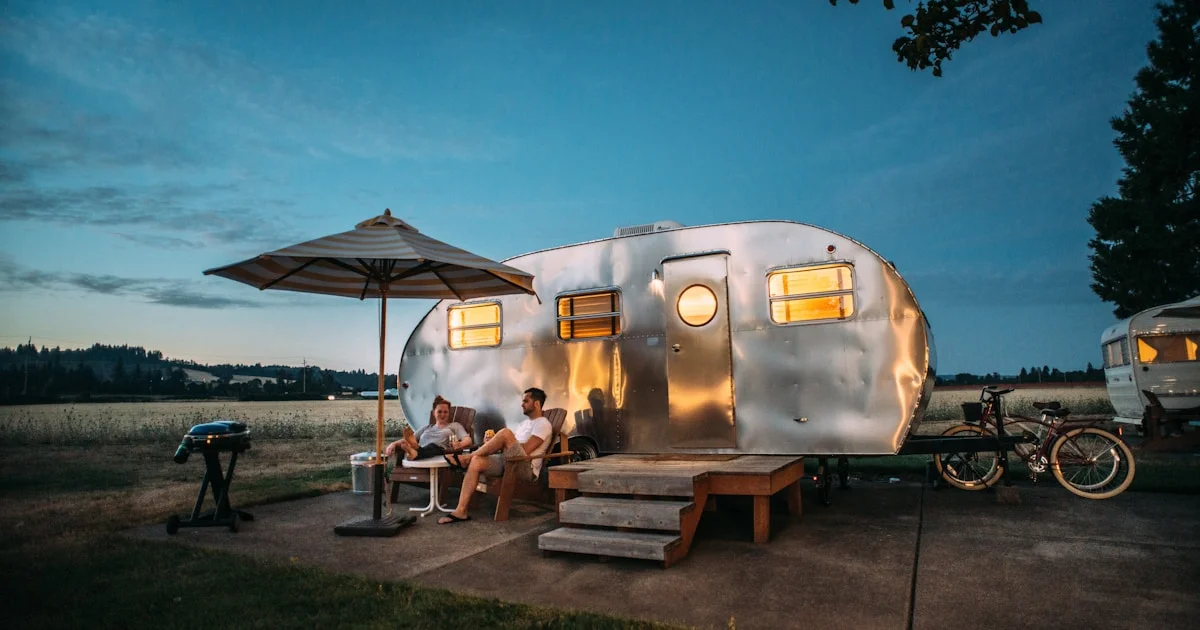
Photo by Hugo Sousa on Unsplash
You are parked at a county fairground in rural Tennessee, kids asleep in the bunk, and the water pump starts hammering every 25 seconds. The fresh tank reads full. Every faucet is shut. Sounds familiar to anyone who has run a Newmar Canyon Star 3927 past its third season. This guide walks through the Class A Motorhome water system faults Newmar owners actually see, with the parts, prices, and step-by-step fixes that work on a stock Canyon Star 3927 chassis.

Photo representative of Class A Motorhome camping setups.
Symptoms: How to Tell If Your Newmar Canyon Star 3927 Has a Problem
The five symptoms below cover roughly 90% of water system faults calls on a Class A Motorhome:
- Water pump cycles every 30 seconds with all faucets off
- No hot water or Truma/Suburban error code E5/E6
- Toilet bowl slowly fills or seal leaks at the blade
- Low fresh-water pressure on city inlet or pump
- Water heater relief valve weeping or dripping
What Causes These Faults on the Newmar Canyon Star 3927
- Air in fresh-water line or empty accumulator tank
- Bad water pump pressure switch or torn diaphragm
- Suburban/Atwood burner assembly soot or failed ECO
- Thetford/Dometic toilet blade seal dried out
- City water inlet backflow check valve stuck open
- Water heater anode rod consumed below 50%
Step-by-Step Diagnosis & Repair
Tools You Need
- Auto-ranging multimeter, 10A DC minimum
- Infrared thermometer (under $30) for heat-based diagnosis
- Non-contact AC voltage tester
- Torx and hex drivers (T15/T20, 5/16”) for appliance covers
- Crimp tool + ring terminals for 12V connections
- Soapy spray bottle or commercial leak detector
- Soldering iron for inverter and ground-fault work
Diagnosis Flow
- Start with a charged battery bank. Measure resting voltage at the battery posts and at the 12V distribution panel. On the Newmar Canyon Star 3927, voltage drop greater than 0.4V between posts and panel means a corroded negative bus — fix that before chasing anything else on the Ford F-53 chassis.
- Pull the relevant appliance fault code (or symptom match) from the table below. The Dometic/Norcold/Truma/Suburban manuals list codes by blink pattern or display, and most Newmar Canyon Star 3927 owners will see one of the five codes listed in the Symptoms section.
- Isolate energy sources before opening covers. Shut the LP tank valve, disconnect shore power, and turn off the inverter. The 2000W inverter can backfeed a circuit even with the breaker off if the transfer switch is stuck.
- Use the infrared thermometer on the appliance. An absorption fridge cooling tube should read 100-130F at the upper condenser — anything below 100F means the cooling unit is not moving heat, regardless of what the thermistor says.
- Document the actual reading (not “feels warm”). Newmar Canyon Star 3927 warranty claims often hinge on a written voltage reading taken at the appliance, not at the panel.
Repair Steps
- Shut the water pump breaker and the city water inlet valve before touching anything. The 50A converter can hold pressure in the accumulator.
- Open the lowest faucet (usually outside shower) and let pressure bleed to 0 psi.
- Replace the failed component (pump pressure switch, water heater ECO, toilet blade seal) with the exact manufacturer part — Dometic, Suburban, and Thetford parts are not interchangeable across model years.
- Re-pressurize with the pump, leak-check with soapy water at every fitting you touched, and confirm the pump holds pressure for 5 minutes with all faucets off.
- Sanitize the fresh tank if you opened any potable-side fitting: 1/4 cup household bleach per 15 gallons, fill, run all faucets, sit 4 hours, drain, rinse with fresh until chlorine smell is gone.
Three-Tier Optimization Plan (Low / Medium / High)
Every fix on the Newmar Canyon Star 3927 falls into one of three cost tiers. Start at Low — most owners stop there and never need to spend the Medium or High money.
| Tier | Cost | What it includes |
|---|---|---|
| Low | $15-$60 | Replace pump strainer screen; Re-seat toilet blade seal with silicone grease; Bleed air from accumulator |
| Medium | $80-$220 | Swap pump pressure switch; Install SHURflo accumulator tank 1 gal; Replace water heater anode + relief valve |
| High | $280-$650 | Upgrade to variable-speed 5.7 GPM pump; Install recirculation retrofit on residential fridge; Add whole-rig 5 micron + carbon filter |
Short Trip / Cross-Country / Winter Full-Time RV Settings
Short Trip (Weekend, 1-2 nights)
- Water: Fresh 30 gal — fill only what you need to keep weight down
- Battery: Battery at 80%+ on departure. 200Ah AGM covers 4 people for ~2.1 days without solar
- Solar: No solar needed for 1-2 nights. Battery-only is fine
- HVAC: Furnace set to 62F overnight, AC at 78F day. 30000 BTU furnace covers down to 30F
- Propane: 1-2 gal propane sufficient for a weekend of cooking + heat
Cross-Country (7-14 days, moving every 2-3 days)
- Water: Fresh 76 gal full at every fill. Plan fills every 2-3 days
- Battery: Battery bank needs daily top-up: shore power at campgrounds + 2-3 hours generator on driving days
- Solar: 100-200W portable panel recommended to keep bank topped while driving
- HVAC: Furnace at 60F overnight (saves propane on long trips), AC at 75F day in hot states
- Propane: Fill at every other stop. 7-gal tank lasts 4-5 days of fall camping with furnace
Winter Full-Time (1+ months stationary, sub-freezing)
- HVAC: Maintain a constant 65°F with the furnace; add Reflectix at the windows, skirt the rig, and fit a basement heater pad.
- Water: Fresh tank at 50–75% gives expansion room; heat-tape every exposed line.
- Battery: Below freezing, choose self-heating lithium — AGM/lead-acid loses 25–30% at 20°F, so add about 100Ah or move up a size.
- Solar: You’ll want 200W+ of roof solar, tilted 30–45° for the winter sun angle.
- Propane: Sub-freezing full-timing uses 30–40 gal of propane a month; an auto-changeover regulator is required.
Rules change by state — sometimes dramatically. Below is the matrix for this fault category, with the three states most relevant to this topic highlighted:
| State | Power limit | Water rule | Gray water | Battery | Generator |
|---|---|---|---|---|---|
| Arizona (AZ) | 50A widely available; some BLM Quartzsite sites no hookups | BLM 14-day limit; no fresh water at most LTVA primitive sites | Gray water may be dispersed on BLM if biodegradable soap used (sparingly) | No state lithium restriction; solar-friendly net-metered sites | Quiet hours 10pm-6am; 60 dB limit at most RV parks |
| California (CA) | 30A/50A at state parks; many beach sites 30A only | Fresh-water fill stations rationed in drought counties; bring full tank | Gray water dumping on BLM illegal — carry to dump station | Lithium < 300Wh permitted in vehicles; > 100Wh needs DOT hazmat for shipping | Generators prohibited 8pm-8am at CA State Parks; solar preferred |
| Florida (FL) | 50A standard; coastal parks recommend surge protection | Counties vary on freshwater fill; some parks closed after hurricanes | Strict — gray water on ground illegal statewide | Lithium marine/RV allowed; FL Fire Marshal signage required in marinas | Hurricane zones: generator runtime unlimited during emergency declarations |
Notes & regional differences
- **California**: CARB-compliant generators only in CA emissions zones. - **Florida**: Wet, humid climate — corrosion on electrical contacts accelerates. - **Arizona**: Quartzsite LTVA requires $180 seasonal permit, water truck delivery.Most Common Mistakes That Make The Problem Worse
- Using household Teflon paste on city water inlet — contaminates fresh water
- Cranking pump pressure adjuster past 45 psi — splits fittings on aging PEX
- Tightening water heater drain plug dry — cross-threads aluminum threads
- Running pump dry to “clear air” — destroys diaphragm in 90 seconds
- Mixing RV antifreeze (pink) with drinking water in fresh tank “to keep it from freezing” — not potable
- Replacing toilet blade without isolating water pump — floods bathroom
Version BUG Timeline for the Newmar Canyon Star 3927
Production run: 2015-present. Common reported faults by model year:
| Year | Issue | Fix | Severity |
|---|---|---|---|
| 2017 | Radiator coolant leak at CAC | Replace end tanks | major |
| 2019 | Ford V10 transmission shudder on grades | Replace fluid + add cooler | major |
Pro Tips From the Field
- Keep a spare pump pressure switch in the parts bin — they fail at the worst times and cost $15-25.
- Mark the city water inlet valve with tape showing “OPEN/CLOSE” — easy to forget which way is which on a Newmar Canyon Star 3927.
- Drain and refill the water heater annually. Sediment kills more heaters than the burner does.
- If the fresh tank reads empty but pump still cycles, check for a cracked pickup tube inside the tank — common on Class A Motorhomes older than 5 years.
Cross-Reference: Other Newmar Canyon Star 3927 Articles
- Newmar Canyon Star 3927 — Fridge / AC / Electrical Faults
- Newmar Canyon Star 3927 — Battery / Solar / Power
- Newmar Canyon Star 3927 — Fuel & Energy Optimization
- Newmar Canyon Star 3927 — Seasonal Equipment Setup
- Newmar Canyon Star 3927 — Payload & Tow Stability
- Newmar Canyon Star 3927 — Common Faults & Error Codes
Other RVs With the Same Water System Faults
- Winnebago Vista 31BE (Class A Motorhome) — Water System Faults
- Winnebago Adventurer 35F (Class A Motorhome) — Water System Faults
- Winnebago Navion 24D (Class A Motorhome) — Water System Faults
- Winnebago Intent 30R (Class A Motorhome) — Water System Faults
- Winnebago Aspect 30J (Class A Motorhome) — Water System Faults
- Winnebago Journey 40P (Class A Motorhome) — Water System Faults
- Winnebago Bolt 24 (Class A Motorhome) — Water System Faults
- Winnebago Travato 59K (Class A Motorhome) — Water System Faults
The Bottom Line
The Newmar Canyon Star 3927 is a capable Class A Motorhome once you sort out the common water system faults patterns. None of these fixes are exotic — they use standard parts you can source from any major RV supplier. Work the diagnosis flow in order, take a real measurement before you buy anything, and revisit this page when the season changes.
Quick answers