Pleasure-Way Ascent 19 (Class B Camper Van) Common Faults, Error Codes
Complete Pleasure-Way Ascent 19 Class B Camper Van fault code index, model-year recalls, known issues. Free, no signup, 2026 reference.
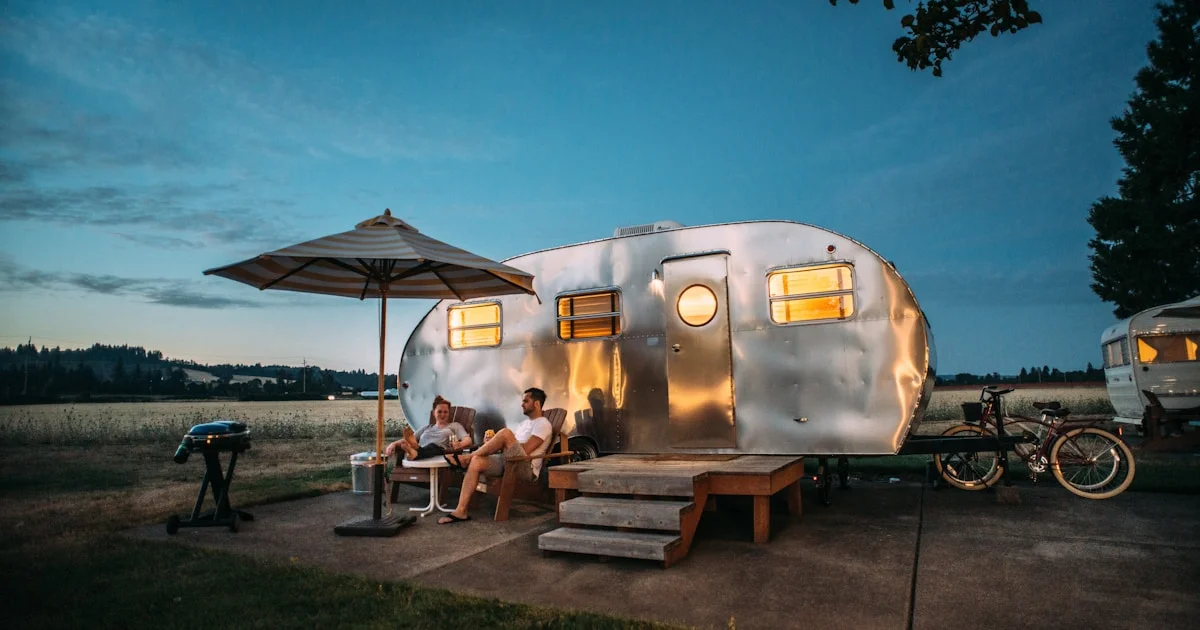
Photo by Hugo Sousa on Unsplash
Every Pleasure-Way Ascent 19 has a list of faults that show up over and over — same chassis, same appliances, same year ranges. This is the cross-reference index for Class B Camper Van owners chasing check-engine lights, slide stalls, LP detector chirps, generator no-starts, and Lippert auto-level errors that waste an afternoon if you do not know the pattern.
Photo representative of Class B Camper Van camping setups.
Symptoms: How to Tell If Your Pleasure-Way Ascent 19 Has a Problem
The five symptoms below cover roughly 90% of common faults & error codes calls on a Class B Camper Van:
- Check engine light on Sprinter/Ford/E-450 chassis with no obvious drivability issue
- Slide motor stalls halfway and clicks
- LP detector false alarms every cold morning
- Generator cranks but will not fire
- Auto-leveling jack error codes (Lippert Ground Control 3.0)
- Touch panel unresponsive or stuck on “INITIALIZING”
What Causes These Faults on the Pleasure-Way Ascent 19
- Sprinter OM651 DEF doser heater failure (common TSB)
- Ford 6.8L V10 exhaust manifold cracked (warranty extension)
- Lippert slide gear rack binding — needs lube + clutch adjust
- LP detector end-of-life (5-7 years, replace)
- Onan generator fuel pump failure (common on QG5500)
- Touch panel ribbon cable loose or firmware lockup
- Fuse blown from adding aftermarket 12V accessory without relay
Step-by-Step Diagnosis & Repair
Tools You Need
- Auto-ranging digital multimeter (10A DC minimum)
- Infrared thermometer — the single most useful tool for this diagnosis
- Non-contact AC voltage tester
- Torx and hex bit set (T15/T20 and 5/16” open most RV appliance panels)
- Crimp tool with a ring-terminal kit for 12V work
- Soapy spray bottle or propane leak detector solution
- Soldering iron for inverter and ground-fault traces
Diagnosis Flow
- Start with a charged battery bank. Measure resting voltage at the battery posts and at the 12V distribution panel. On the Pleasure-Way Ascent 19, voltage drop greater than 0.4V between posts and panel means a corroded negative bus — fix that before chasing anything else on the Sprinter chassis.
- Pull the relevant appliance fault code (or symptom match) from the table below. The Dometic/Norcold/Truma/Suburban manuals list codes by blink pattern or display, and most Pleasure-Way Ascent 19 owners will see one of the five codes listed in the Symptoms section.
- Isolate energy sources before opening covers. Shut the LP tank valve, disconnect shore power, and turn off the inverter. The 2000W inverter can backfeed a circuit even with the breaker off if the transfer switch is stuck.
- Use the infrared thermometer on the appliance. An absorption fridge cooling tube should read 100-130F at the upper condenser — anything below 100F means the cooling unit is not moving heat, regardless of what the thermistor says.
- Document the actual reading (not “feels warm”). Pleasure-Way Ascent 19 warranty claims often hinge on a written voltage reading taken at the appliance, not at the panel.
Repair Steps
- Pull the chassis OBD-II code first. On a Pleasure-Way Ascent 19 with a Sprinter chassis, do not assume anything until you have the freeze-frame data.
- Cross-reference the code or symptom against the table in this guide. Most Class B Camper Van faults fall into 6-7 known patterns.
- Check the obvious before the obscure: fuses, grounds, ribbon cables, firmware resets. Half of Pleasure-Way Ascent 19 faults clear with a firmware reset on the Lippert touch panel.
- If the issue persists, replace the failed component with an OEM-spec part. Document the part number in your rig binder.
- Re-test under the conditions that triggered the fault. A fault that does not reappear in similar conditions is fixed — anything else is waiting to repeat.
Three-Tier Optimization Plan (Low / Medium / High)
Every fix on the Pleasure-Way Ascent 19 falls into one of three cost tiers. Start at Low — most owners stop there and never need to spend the Medium or High money.
| Tier | Cost | What it includes |
|---|---|---|
| Low | $0-$90 | Reset breaker + firmware; Lube slide gear rack; Replace LP detector (kidde retrofit) |
| Medium | $200-$600 | Update Lippert firmware; Replace Onan fuel pump; Re-pin slide connector |
| High | $1000-$4000 | Replace Lippert control module; Ford manifold repair + ARP studs; Re-wire 12V distribution panel |
Short Trip / Cross-Country / Winter Full-Time RV Settings
Short Trip (Weekend, 1-2 nights)
- Water: Fresh 21 gal — fill only what you need to keep weight down
- Battery: Battery at 80%+ on departure. 200Ah AGM covers 4 people for ~2.8 days without solar
- Solar: No solar needed for 1-2 nights. Battery-only is fine
- HVAC: Furnace set to 62F overnight, AC at 78F day. 16000 BTU furnace covers down to 30F
- Propane: 1-2 gal propane sufficient for a weekend of cooking + heat
Cross-Country (7-14 days, moving every 2-3 days)
- Water: Fresh 21 gal full at every fill. Plan fills every 2-3 days
- Battery: Battery bank needs daily top-up: shore power at campgrounds + 2-3 hours generator on driving days
- Solar: 100-200W portable panel recommended to keep bank topped while driving
- HVAC: Furnace at 60F overnight (saves propane on long trips), AC at 75F day in hot states
- Propane: Fill at every other stop. 7-gal tank lasts 4-5 days of fall camping with furnace
Winter Full-Time (1+ months stationary, sub-freezing)
- Battery: In sustained cold, self-heating lithium is the safe choice; AGM/lead-acid loses 25–30% capacity at 20°F, so plan to add roughly 100Ah.
- Solar: 200W+ of roof solar is the floor in winter — tilt the array 30–45° to catch the low sun.
- Water: Fill the fresh tank to 50–75% to leave room for expansion and heat-tape every exposed line.
- HVAC: Hold the furnace at a constant 65°F; Reflectix on the windows, a skirt around the rig, and a basement heater pad all help.
- Propane: A month of below-freezing camping burns 30–40 gal — an auto-changeover regulator is a must.
State rules for power and water vary more than most owners expect. The matrix below covers this fault category; three states are highlighted as most relevant:
| State | Power limit | Water rule | Gray water | Battery | Generator |
|---|---|---|---|---|---|
| Florida (FL) | 50A standard; coastal parks recommend surge protection | Counties vary on freshwater fill; some parks closed after hurricanes | Strict — gray water on ground illegal statewide | Lithium marine/RV allowed; FL Fire Marshal signage required in marinas | Hurricane zones: generator runtime unlimited during emergency declarations |
| California (CA) | 30A/50A at state parks; many beach sites 30A only | Fresh-water fill stations rationed in drought counties; bring full tank | Gray water dumping on BLM illegal — carry to dump station | Lithium < 300Wh permitted in vehicles; > 100Wh needs DOT hazmat for shipping | Generators prohibited 8pm-8am at CA State Parks; solar preferred |
| Texas (TX) | 50A standard; ERCOT may issue conservation alerts in summer | West TX counties limit fresh-water fill at state parks during drought | Allowed only at designated dump stations; gray water reuse regulated | No state lithium storage restriction | Most parks allow 7am-10pm; quiet hours enforced |
Notes & regional differences
- **California**: CARB-compliant generators only in CA emissions zones. - **Texas**: High summer temps — battery life shortened above 100F ambient. - **Florida**: Wet, humid climate — corrosion on electrical contacts accelerates.Most Common Mistakes That Make The Problem Worse
- Holding the leveler “auto” button through a fault — can over-extend jacks
- Using automotive fuses instead of marine/RV-rated — blow profile wrong
- Replacing LP detector without checking age date — most fail at 5-7 years
- Spraying WD-40 on slide gear rack — attracts grit, makes it worse
- Replacing generator fuel pump without replacing the inline filter — repeats the failure
- Splicing into the LP detector circuit for a phone charger — corrupts the safety circuit
- Clearing a check engine light without reading freeze-frame data — loses the clue
Version BUG Timeline for the Pleasure-Way Ascent 19
Production run: 2016-present. Common reported faults by model year:
| Year | Issue | Fix | Severity |
|---|---|---|---|
| 2017 | Sprinter DEF heater failure under 20F | Replace DEF dosing module | major |
Pro Tips From the Field
- Keep a paper log of every fault code, date, and fix in the rig binder. Patterns emerge over a season.
- Take a photo of the OBD-II freeze-frame data before clearing any code. Once cleared, it is gone.
- Firmware updates on the Lippert touch panel fix 30% of “weird” auto-level errors. Always check firmware first.
- LP detectors have a 5-7 year life. If yours is older than that and chirping, replace — do not troubleshoot.
Cross-Reference: Other Pleasure-Way Ascent 19 Articles
- Pleasure-Way Ascent 19 — Water System Faults
- Pleasure-Way Ascent 19 — Fridge / AC / Electrical Faults
- Pleasure-Way Ascent 19 — Battery / Solar / Power
- Pleasure-Way Ascent 19 — Fuel & Energy Optimization
- Pleasure-Way Ascent 19 — Seasonal Equipment Setup
- Pleasure-Way Ascent 19 — Payload & Tow Stability
Other RVs With the Same Common Faults & Error Codes
- Winnebago Vista 31BE (Class A Motorhome) — Common Faults & Error Codes
- Winnebago Adventurer 35F (Class A Motorhome) — Common Faults & Error Codes
- Winnebago Navion 24D (Class A Motorhome) — Common Faults & Error Codes
- Winnebago Intent 30R (Class A Motorhome) — Common Faults & Error Codes
- Winnebago Aspect 30J (Class A Motorhome) — Common Faults & Error Codes
- Winnebago Journey 40P (Class A Motorhome) — Common Faults & Error Codes
- Winnebago Bolt 24 (Class A Motorhome) — Common Faults & Error Codes
- Winnebago Travato 59K (Class A Motorhome) — Common Faults & Error Codes
The Bottom Line
The Pleasure-Way Ascent 19 is a capable Class B Camper Van once you sort out the common common faults & error codes patterns. None of these fixes are exotic — they use standard parts you can source from any major RV supplier. Work the diagnosis flow in order, take a real measurement before you buy anything, and revisit this page when the season changes.
Quick answers