How to Read RV Campground Listings for First-Time Renters
Updated for 2026. Learn how to read RV campground listings for first-time renters. Decode hookup types, site descriptions, and spot red flags before you book.
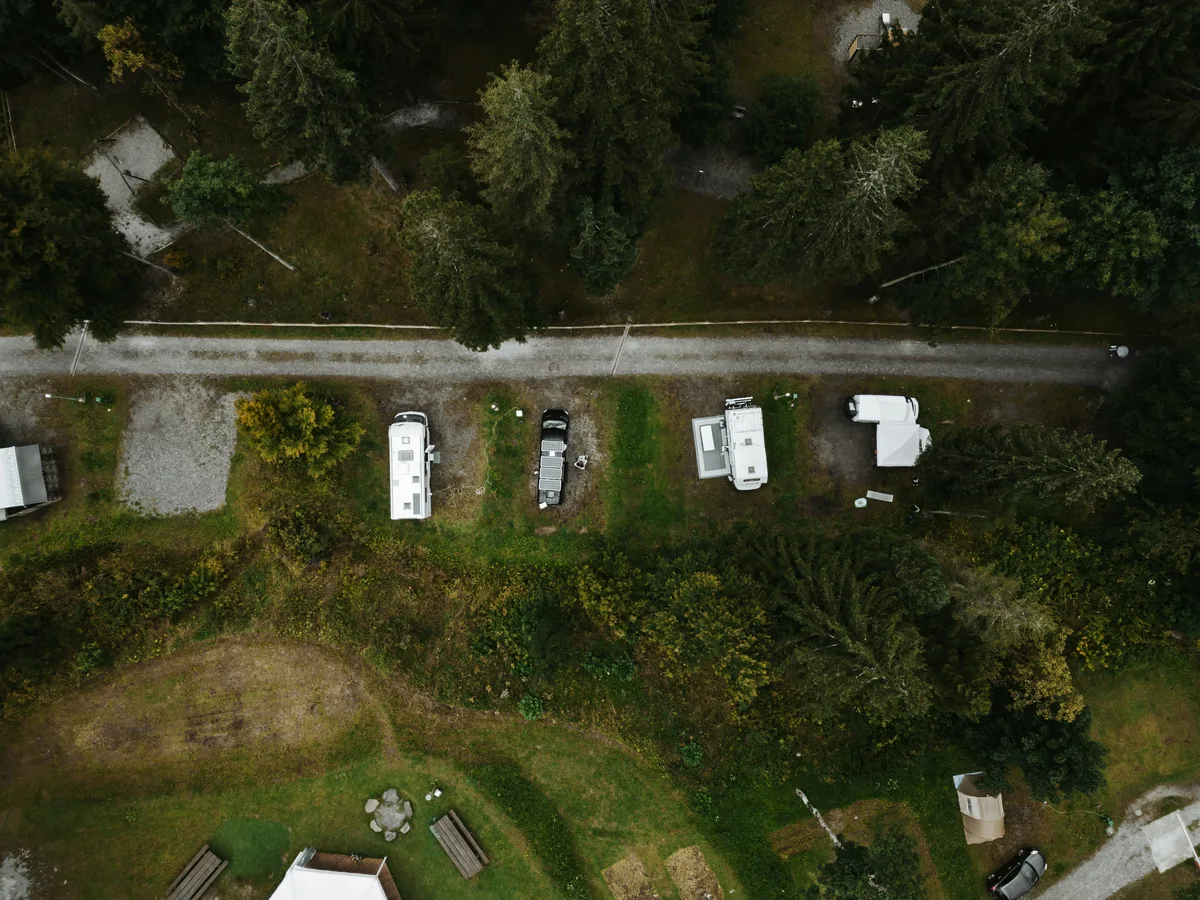
Photo by Unsplash
Booking an RV campsite online looks simple: scroll photos, pick a pretty spot, pay. Then you arrive and the site is too short, the hookup is on the wrong side, or your 30-foot motorhome cannot make the turn into it. The photos sell the dream; the listing fields decide whether it works.

Photo by Roberto Nickson on Unsplash
This guide teaches you to decode campground listings — the fields that matter, the red flags, and how to compare sites across platforms.
The Core Fields Every Listing Shows
Most platforms — Recreation.gov, state park systems, KOA, private-park sites — use similar fields. Each tells you whether the site fits your rig.
Hookup Types: The Most Important Field
| Term | Abbreviation | What you get |
|---|---|---|
| Full hookup | FHU | Water, electric (30A or 50A), and sewer at the site |
| Water and electric | W/E | Water and electric only, no sewer |
| Water, electric, sewer | W/E/S | Same as FHU, written out |
| Electric only | E | Electric only, no water or sewer |
| Water only | W | Water only |
| No hookups | Dry | None — you rely on tanks and battery/generator |
Match the electric to your rig. A 50-amp coach on a 30-amp pedestal needs a dogbone adapter and still cannot draw full power. A 30-amp trailer on a 50-amp pedestal is fine with an adapter.
Site Type: Pull-Through vs Back-In
- Pull-through: drive in one side, out the other. No backing. Easier for big rigs and nervous first-timers, but usually more open.
- Back-in: reverse into the site. More skill, often more shade and privacy.
If you have never backed a 30-foot vehicle, filter for pull-through until you have practiced.
Max RV Length
This is the longest rig the pad physically fits, including hitch, bike rack, and propane tanks. Exceeding it risks getting stuck, damaging the site, or being turned away at check-in. Measure your real length and leave a few feet of margin.
Site Grade
Listings note “level,” “sloped,” or “uneven.” Request level if you can. Leveling a 12,000-pound motorhome on a hill with blocks is no fun and risks the fridge not cooling.
Red Flags to Watch
- “Will fit most RVs” with no number — never trust a length without a figure.
- Photos only of the view, never the site — they may be hiding a tight or sloped pad.
- Recent reviews mentioning “couldn’t fit,” “low branches,” or “no level spot.”
- Hookup on the wrong side for your connections — ask or pick another site.
- Tight interior roads in reviews if you drive a Class A or tow a trailer.
Comparing Sites Across Campgrounds
When two parks look similar, sort by what affects your stay:
- Hookup match (full vs partial vs dry)
- Site length and grade
- Distance to the trailhead, town, or dump station you need
- Quiet hours and generator rules
- Cancellation policy
Use the Find RV Campsite Quiz to narrow the campground type, then apply these fields to judge individual sites. A site that fits your rig and your hookup is worth more than a cheaper one you cannot use.