Winter RV Rental Travel Tips: Cold Weather Do's and Don'ts

Planning your first winter RV trip? Learn cold weather prep, heating, driving safety and water care with beginner tips, common mistakes and checklists.

Winter RV Rental Travel Tips: Cold Weather Do's and Don'ts

Photo by Aaron Burden on Unsplash

Winter RV Rental Travel Tips: Cold Weather Do’s and Don’ts

A winter rv trip is a different animal than a summer one. The crowds are gone, campgrounds cost less, and the landscapes look completely transformed by snow and quiet. But cold weather also asks more of you and the rig. Heat matters, water systems can freeze, roads get slick, and daylight is short. For first-time renters, winter adds a layer of planning that summer trips skip entirely.

This guide covers the winter rv rental tips that matter most for beginners. You will learn how to prepare for cold-weather driving, how to keep the RV warm without draining your propane, how to manage water and plumbing in freezing temperatures, and what to pack that you would never think of in July. We also cover the mistakes that catch first-timers off guard and a checklist to run through before you pick up the rig.

Winter RVing is rewarding and entirely doable for beginners who plan ahead. The goal of this guide is to help you enjoy it rather than endure it.

Choosing the Right RV for Winter Travel

Not every rental is built for cold weather. If you have a choice, look for a rig marketed as four-season or cold-weather rated. These typically have better insulation, heated and enclosed underbellies that protect the water tanks, and dual-pane windows. Class C motorhomes and some larger travel trailers are the most common winter-capable rentals.

Key features to ask about:

  • Heated underbelly — Keeps fresh water tanks and pipes from freezing.
  • Arctic package — A bundle of insulation and heating features some manufacturers include.
  • Enclosed and insulated dump valves — Prevents the grey and black valve handles from freezing.
  • Dual-pane windows — Reduces heat loss and condensation.

If the rental company cannot confirm these features, you can still winter camp, but you will need to manage water more carefully and accept that the rig will use more propane. Ask specifically whether the rig is winterized with antifreeze, because a winterized rig cannot use its fresh water system until the antifreeze is flushed by a professional.

For the rental process itself, the guide to renting an RV for the first time covers what to ask at pickup and what to inspect before driving off.

Driving an RV in Winter Conditions

Winter driving in an RV demands more caution than summer driving. The rig is heavier, taller, and harder to stop than a passenger car, and you are likely unfamiliar with how it handles on snow or ice.

Before You Drive

  • Check the forecast for your entire route, not just your destination.
  • Confirm the rental includes tire chains or traction aids if you will cross mountain passes.
  • Make sure windshield washer fluid is rated for freezing temperatures.
  • Top off the fuel tank at every opportunity. Running low in cold weather is riskier because remote stations may close in storms.

On the Road

  • Slow down significantly. Stopping distances double or triple on snow.
  • Increase following distance to at least six seconds behind the vehicle ahead.
  • Avoid sudden braking or steering inputs. Smooth and gradual is the rule.
  • Use lower gears on descents rather than riding the brakes, which can overheat and fade.
  • If conditions deteriorate, pull over. A late arrival is better than no arrival.

Black ice is the hidden danger. It forms on bridges and shaded sections of road before anywhere else. If the road looks wet but the temperature is near freezing, assume ice.

Heating: Keeping Warm Without Running Out of Propane

The propane furnace is your primary heat source in a winter rv trip. It works well, but it consumes propane faster than any other system in the RV. On a cold night with temperatures in the teens, a single 20 lb tank can run dry in two to three nights of steady furnace use.

Managing Propane in Cold Weather

  • Start every leg of the trip with a full tank. Do not assume you will find a refill easily in winter.
  • Check the tank level every morning. The furnace is easy to forget about during the day.
  • Lower the thermostat at night and use extra bedding. Dropping from 70°F to 62°F overnight can extend a tank by a full day.
  • Keep cabinet doors open under sinks so warm air circulates to plumbing in those walls.

Use the RV propane calculator to estimate how much propane your furnace will consume based on expected temperatures and trip length. Knowing the number ahead of time removes the most common winter anxiety.

Supplemental Heat

Some renters bring a small electric ceramic heater for when they have shore power. These supplement the furnace and reduce propane use, but they draw significant amperage. Plug them directly into a wall outlet, never into a power strip or extension cord, and keep them away from bedding and curtains. Never use a portable propane heater inside the RV. They are not vented and produce carbon monoxide.

Water and Plumbing in Freezing Weather

Water is the system most at risk in winter. When temperatures drop below freezing, anything with water in it can crack or burst: fresh water lines, the water heater, drain valves, and the fresh water tank itself.

If the Rig Is Winterized

A winterized RV has antifreeze in the plumbing system. You cannot use the sinks, shower, or toilet flush without undoing the winterization, which is a job for a technician. Instead:

  • Use bottled water for drinking, cooking, and brushing teeth.
  • Use the toilet by pouring a small amount of antifreeze-safe RV antifreeze down the bowl after each use (ask the rental company for their recommended method).
  • Skip the onboard shower and use campground bathhouses.

This sounds inconvenient, and it is, but it is how many winter renters operate. The payoff is access to quiet, beautiful winter landscapes without risking expensive plumbing damage.

If the Rig Is Not Winterized and Has a Heated Underbelly

You can use the water system, but with care:

  • Keep the furnace running at all times, even when you leave the rig. Set it to at least 50°F.
  • Keep cabinet doors open so warm air reaches pipes in exterior walls.
  • Disconnect and stow the city water hose at night. A frozen hose is useless and can damage the connection.
  • Use a heated water hose if temperatures will stay below freezing for extended periods.

Never let the grey or black tanks fill completely in cold weather. A full tank is more likely to freeze at the valve. Dump when tanks reach two-thirds full.

Power and Battery Management in Cold

Cold weather reduces battery capacity. A battery that lasts two days in summer may struggle to last one in winter, because chemical reactions slow down in low temperatures. If you are boondocking, this matters a lot. If you have shore power, it matters less.

For dry camping in winter:

  • Keep batteries above 50% charge to avoid damage from deep discharge in cold.
  • Run the generator during the day to recharge, not at night when it disturbs neighbors.
  • Insulate or warm the battery compartment if the rig allows it.

The boondocking water and battery calculator helps you plan power usage for off-grid winter nights so you do not wake up to dead batteries and a cold rig.

What to Pack for a Winter RV Trip

Winter packing is different from summer packing. You need more of some things and less of others.

Clothing

  • Layered clothing: base layer, insulating mid-layer, waterproof outer shell.
  • Warm boots with good traction for icy campground surfaces.
  • Two pairs of gloves so one can dry while you wear the other.
  • A warm hat that covers your ears.

RV-Specific Winter Gear

  • Extra propane if the rental allows you to carry a spare cylinder.
  • A small shovel for clearing snow from around the rig or leveling blocks.
  • Non-clumping cat litter or traction mats for getting unstuck on ice.
  • A windshield ice scraper and snow brush.
  • Bottled water for drinking and cooking if the rig is winterized.

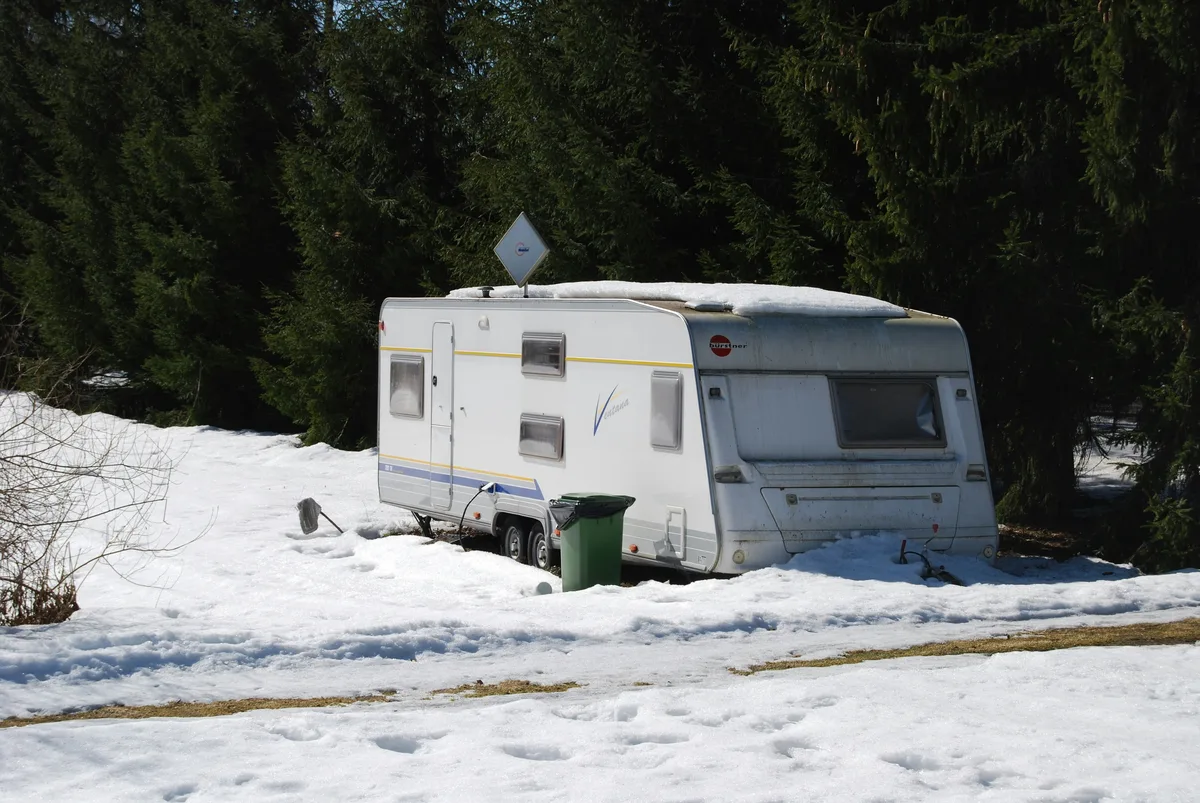
RV parked in a snowy mountain campground at dusk

Photo by Aaron Burden on Unsplash

Choosing Winter Campgrounds

Not all campgrounds stay open in winter, and those that do may offer limited services. Water may be shut off at the spigot to prevent frozen pipes, leaving you with electric-only or full dry camping. Call ahead to confirm what is actually available.

Look for:

  • State park campgrounds that remain open year-round, often with electric hookups.
  • Private RV parks that advertise winter operations.
  • Campgrounds at lower elevations if you want to avoid the deepest cold.

Winter camping is quieter, which many renters love. Sites are easier to book, rates are lower, and you often have scenic areas to yourself. The trade-off is shorter daylight hours and the need to plan activities around early sunsets.

Common Beginner Mistakes

  • Renting a rig without asking whether it is winterized or cold-weather rated.
  • Running out of propane on the first cold night because the furnace was set to 75°F.
  • Leaving the city water hose connected overnight in freezing temperatures.
  • Letting grey or black tanks fill completely, increasing the risk of frozen valves.
  • Driving at summer speeds on winter roads.
  • Forgetting that daylight is short, leaving setup or exploration for dusk.
  • Assuming all campgrounds are open year-round.

Practical Winter RV Trip Checklist

  • Confirm the rental rig is suitable for your expected temperatures.
  • Ask whether the rig is winterized and plan water use accordingly.
  • Check the forecast for the full route and destination.
  • Start with a full propane tank and know where refills are available.
  • Pack layered clothing, warm boots, gloves, and a hat.
  • Bring bottled water if the rig is winterized.
  • Carry a shovel, traction mats, and an ice scraper.
  • Keep the furnace running at all times to protect plumbing.
  • Disconnect and stow the water hose at night.
  • Dump tanks at two-thirds full, not completely full.
  • Drive slowly and increase following distance on winter roads.
  • Confirm campground services and availability before booking.

Wrapping Up

Winter rv rental tips come down to three things: manage your heat, protect your water, and drive carefully. The furnace is your best friend but your biggest propane consumer, so plan refills and lower the thermostat at night. Water systems need either a heated underbelly or a switch to bottled water. Roads demand patience and a willingness to pull over when conditions worsen.

The reward for the extra planning is a quieter, cheaper, and often stunningly beautiful RV experience. Snow-covered campgrounds, empty trails, and crackling fires are worth the effort. Use the RV propane calculator to budget your heating fuel and the boondocking calculator to plan off-grid power before you go. A winter trip done right is one you will remember for years.

Disclaimer: This guide offers general beginner educational information only. Complex RV mechanical maintenance, repairs and safety adjustments should be completed by certified RV professionals. Always follow your RV rental company and vehicle manufacturer instructions.

Quick answers

Frequently Asked Questions

Can you rent an RV in winter?
Yes, many rental companies operate year-round, though some smaller regional fleets pause in cold months. Winter rentals are often cheaper and campgrounds are less crowded. Confirm the rig is winterized or ask how to use it safely in freezing temperatures before booking.
How cold is too cold for an RV trip?
Most rented RVs handle temperatures down to around 20°F (-6°C) without major issues if the furnace runs and you keep water flowing. Below that, freezing pipes become a real risk unless the rig is four-season rated. For beginners, plan trips where overnight lows stay above 15°F (-9°C).
Will my RV furnace keep me warm in winter?
Yes, the propane furnace in most rented RVs is designed for cold weather and keeps the interior comfortable even in freezing temperatures. The trade-off is propane consumption. A furnace can drain a tank in two to three cold nights, so plan refills and monitor levels.
Can I use the RV water system in freezing weather?
It depends on the rig and temperature. If the rental is winterized with antifreeze, you cannot use the fresh water system and must rely on bottled water. If it is not winterized and has a heated underbelly, you can use water but should keep the furnace running to prevent freezing. Ask the rental company before you leave.